

Blog
BPC 157 for Immune Support: Does it Really Work?

Interest in BPC 157 immune system support continues to grow among wellness seekers. They are continually exploring advanced recovery methods and resilience support.
This peptide was previously the focus of gut protection and tissue repair. Attention has now shifted to its potential as an immune and inflammatory modulator.
Could its developing reputation link it to actual biological effects? Perhaps the curiosity of interested parties has surpassed existing scientific evidence.
This article examines the BPC 157 mechanism of action. It also focuses on vascular signaling and inflammatory pathways. We will also discuss how these processes could influence immune balance.
The information will also explore anti-inflammatory effects and post-viral recovery. These facts will remain grounded in the available scientific literature.
Consider all factors before exploring BPC 157 for immune system support. Livv Natural, a reliable source, offers peptide-based care instead of quick fixes.
What is BPC 157 and how does it work?
BPC 157 is a peptide, also known as Body Protection Compound 157. It’s synthetically reproduced from a protein found in gastric juice.
It promotes healing and may protect the stomach lining. It also seems to support tissue repair across multiple systems.
BPC 157’s origin and potential healing effects have spiked researchers’ interest.
Studies show that BPC 157 mechanism of action has multi-pathways, not just one response.
Preclinical studies reflect that BPC 157 supports tissue repair by promoting angiogenesis. It improves blood flow and activates cellular repair. These effects have led to further studies of musculoskeletal recovery.
BPC 157 peptide also plays a role in inflammation regulation. Research shows it may influence nitric oxide signaling and cytokine activity. Both contribute to immune balance.
It potentially reduces excessive inflammatory responses, which prevents tissue damage. BPC 157 may indirectly provide immune system support during physical stress or recovery.
These actions suggest BPC 157 is a promising peptide for holistic recovery. Athletes, biohackers, and integrative health patients support this option for improved resilience. It is a great alternative to short term suppression.
How BPC 157 supports the immune system
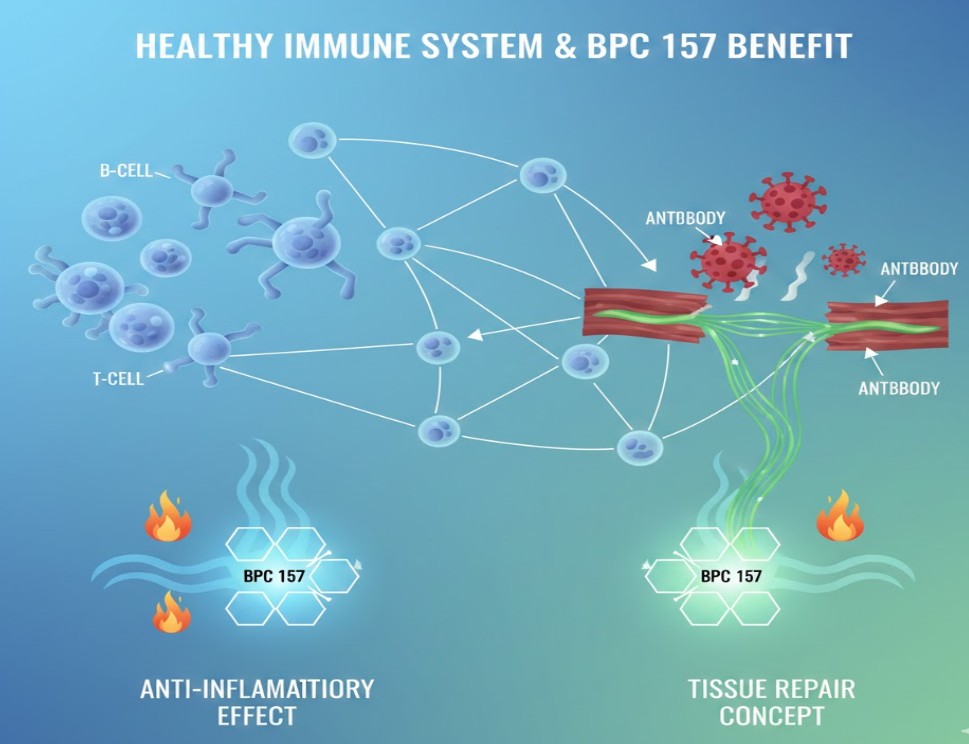
Research into BPC 157 immune system support is still emerging. Early findings suggest it could regulate immune balance during inflammatory and oxidative stress. Rather than acting as an immune stimulant, it performs as a regulator.
Immune modulation studies
Animal and cell studies show BPC 157 may influence inflammation and oxidative stress.
The observed effects of BPC 157 include:
- A reduction in pro-inflammatory cytokines. Leading to decreased inflammation and tissue damage.
- Improving antioxidant activity helps in neutralizing free radicals and reducing oxidative stress. It leads to decreased inflammation and metabolic health improves.
- The protection of endothelium modulates nitric oxide signaling. These functions assist in preventing inflammation and blood clots.
These results suggest that BPC 157 may indirectly form part of the immune system’s support. It eases inflammation and oxidative stress instead of acting as an immune system booster.
Gut-immune axis and inflammation
The gut-immune axis is another area where BPC 157 could play a significant role. Much of the immune system resides in the gastrointestinal tract. Preclinical studies suggests BPC 157 has the following effects:
- Reduced inflammation of the gut and enhanced repair of the intestinal lining.
- Supporting barrier integrity and improves microcirculation. It helps prevent overactions in the immune system triggered by toxins in the gut wall.
These effects stabilize the gut barrier and ease inflammatory signaling.
Tissue repair and recovery from illness
Researchers widely studied BPC 157 for accelerated healing. Mainly in musculoskeletal injuries.
- It appears to shorten the inflammation phase. It then allows a faster transition to tissue repair and regeneration.
- It protects organs by shielding cells from damage and aids inflammation reduction.
These properties may support recovery from intense training, surgery, or illness. Research remains ongoing.
Post-viral recovery and BPC 157 COVID interest
Interest has extended to BPC 157 Covid applications. Certain research suggests may assist with the following:
- Supporting blood vessel function and reducing inflammatory damage.
- Normalizing nitric oxide-related signaling after viral illnesses.
The limited human trials have not proven BPC 157 Covid as a treatment. It remains experimental in immune system support. Usage under expert guidance is crucial.
BPC 157 and post-viral recovery
Its anti-inflammatory and organ-protective effects have sparked interest in BPC 157 post-viral recovery. After viral infections, it could affect various systems and delay full recovery.
BPC 157 studies did not include functioning as an antiviral, but rather to assist in restoring balance.
Several animal studies show BPC 157 reduces inflammatory cytokines. It simultaneously protects organs such as the liver, lungs, kidneys, and brain.
In addition, there’s an improvement in antioxidant balance and microcirculation. Endothelial protection is vital after infections that disrupt blood flow and oxygen delivery.
Combined, these mechanisms help reduce extended inflammatory damage.
Researchers have also explored healing peptides for lingering post-viral symptoms. Studies link BPC 157 to faster healing of muscle, connective tissue, and gut lining.
Accelerated repair can reduce the workload of the immune system after an infection. These factors have also contributed to BPC 157 Covid related recovery discussions.
Peptide therapy should support conventional medical treatments, not replace them. There is no evidence from human trials to support BPC 157 as a treatment for viral infections.
Anti-inflammatory effects of BPC 157
Early research links BPC 157’s anti-inflammatory effects to key signaling pathways. Instead of acting as a pain reliever, it influences local and system inflammation.
It helps in understanding how BPC 157 benefits may extend beyond symptom relief. It targets the biological triggers of inflammation. This effect impacts the BPC 157 immune system connection.
Preclinical studies show that BPC 157 could reduce inflammatory markers. It discovered a shift in the immune cells toward a more reparative function.
As nitric oxide signaling and antioxidant activity become enhanced, secondary inflammation reduces. These mechanisms support the consistent findings with joint, gut, and soft tissue models.
Depending on where the inflammation occurs, both local and general areas benefit. Locally, BPC 157 reduces swelling and tissue damage where injury and inflammation occur.
Systemically, the effects protect organs exposed to ischemia, medication stress, or immune activation. Its impact on circulation and cellular signaling allows a broader control of inflammation.
This consistency of anti-inflammatory effects makes the BPC 157 immune system connection relevant. It’s more applicable for chronic inflammatory or autoimmune conditions.
As it reduces excessive inflammation, it preserves barrier and blood vessel integrity. These actions lead to BPC 157 potentially supporting immune balance. Clinicians’ discussions revealed it as a complementary long-term option for immune health.
BPC 157 dosage and administration for immune support

Currently, there’s no standardized, FDA-approved dosing for this peptide. BPC 157 dosage guidance for wellness is usually based on practitioner protocol. It’s also sourced from extrapolated animal research. The same applies to BPC 157 immune system support.
Most recommendations emphasize conservative dosage, timed cycles, and professional oversight.
Common dosing ranges
In sports medicine and integrative settings, the dosage ranges:
- Subcutaneous injections: Approximately 200 to 500 mcg per day. Up to 1000 mcg for a more intensive treatment. The latter is usually split into one or two doses.
- Oral or capsules: Between 100 to 50 mcg, one to two times daily. Usually administered for gut and general inflammation.
- Cycle length: Treatment commonly lasts two to six weeks for acute issues. In more stubborn conditions, it can last 8 to 12 weeks, followed by a break.
These dosages are not universal. They are from small human reports or practitioner experience.
Subcutaneous vs oral administration
The route of administration influences BPC 157’s usage.
- Subcutaneous injections: A preferred method for musculoskeletal or soft tissues. It has a higher absorption rate and a faster onset.
- Oral/capsules: Used for gut immune health and inflammation goals. It’s a more convenient method.
Safety, tolerability, and best practices
Animal studies show BPC 157 peptide to have a favorable safety signal. Human data remains limited, with insufficient long-term safety information.
Best practices usually include:
- Start with the lowest dose in the dosage range. Adjust the amount as needed.
- Limit the cycles to two to six weeks, with rest periods in between.
- Avoid use during pregnancy, cancer, or without medical supervision.
The importance of quality sourcing
Safe use includes reputable sourcing. Peptides can become contaminated or degraded when using unregulated retailers.
Clinics such as Livv Natural supports quality-control sourcing and professional guidance.
Scientific evidence and research summary
Most of BPC 157 research is currently from animal and laboratory studies. The findings reflect a peptide with broad protective and repair focus.
The studies consistently reflected effects as tissue protection, inflammation control, and vascular stability. Human evidence remains limited and exploratory.
- Preclinical research shows BPC 157 protects organs like the gut, liver, and kidneys. This protection occurs when there’s intense inflammatory stress.
- Studies also show enhanced angiogenesis and improved healing of the musculoskeletal.
- When evaluating BPC 157 mechanism of action, several immune pathways emerge. It may not directly stimulate immune support, but regulates it through various actions.
- BPC 157 immune system connection also created discussions on viral and post-viral inflammation. Research related to COVID recovery peptides and related inflammation is ongoing.
- Peer review discussions suggest potential relevance for endothelial and microvascular dysfunction. This includes interest in inflammatory issues seen in Covid related illnesses. These ideas rely on data drawn from other studies.
Scientific consensus regards BPC 157 as a promising experimental peptide. Its potential role in immune modulation and reducing inflammation is fascinating.
Safety, side effects, and considerations
Early animal studies show BPC 157 safety data as encouraging. Yet, the evidence base is very limited, especially in humans. A small human pilot study conducted showed no side effects.
A preclinical safety evaluation reported no minimal toxic or lethal doses in animals. It also did not reflect any developmental, genetic, or allergic side effects.
The absence of data on long-term and high-dose effects requires medical supervision.
Consider the following precautions:
- Avoid self-experimenting with large doses or stacking. Stay clear of continuous, open-ended cycles.
- Monitor for symptoms or allergic reactions and discontinue use if any appear.
- Pregnant and breast women are to exercise extra care or avoid it completely. Those with active cancer, cardiovascular, liver, or kidney disease should also proceed cautiously.
Key peptide therapy considerations include:
- There is no real formal data regarding interactions with prescription drugs or supplements. Clinicians recommend proceeding conservatively.
- BPC 157 peptide is on the anti-doping list as a prohibited substance. Competitive athletes should avoid consumption.
- The gaps in human evidence strongly suggest professional supervision. An experienced clinician can provide useful assessments, including potential risks. They also have access to higher-quality products.
Livv Natural emphasizes safe and responsible use. We offer a personal consultation with one of our resident experts. Together, you can create a personalized treatment plan.
Frequently asked questions about BPC 157 for immune support
Do you still have unanswered questions? Perhaps you need some additional information on BPC 157 immune support. Here are a few points that may help:
Can BPC 157 improve immune function?
BPC 157 immune system can improve with inflammation regulation and endothelial tissue protection. Combined with maintaining organ resilience, immune responses remain controlled.
Is BPC 157 safe for post-COVID recovery?
Evidence of BPC 157 covid and subsequent recovery remains preclinical. There are no large human trials to support the safety or effectiveness. The interest stems from theoretical anti-inflammatory and vascular effects.
How long does it take to see effects on inflammation?
Preclinical data and practitioner observations suggest effects may occur within days. Tissue repair effects appear to take a few weeks, with individual responses varying.
How should BPC 157 be administered for best results?
There is no standardized protocol for BPC 157 dosage. Subcutaneous injection and oral use depend on their goals. A qualified professional should always supervise administration.
Is PBC 157 right for your immune health?
BPC 157 peptide offers a promising, and still experimental, approach to immune support. Its benefits include anti-inflammatory effects, organ protection, and accelerated healing.
These effects and others contribute to overall immune resilience. Preclinical studies highlight BPC 157’s benefits but with limited human data. The efficacy of infections and post-viral recovery have small trials.
Responsible use is essential, which includes supervision by a knowledgeable practitioner. Sourcing products such as Livv Natural BPC 157 guarantees you high-quality.
Interested in exploring peptide-supported immune and recovery strategies? At Livv Natural, we offer consultations with a team of experts. Helping you integrate BPC 157 immune system support into your broader health plans.