

Blog
GHK-Cu Peptide Benefits: Copper Peptide for Youthful Skin and Stronger Hair

Your skin can look older for one simple reason: the layer under the surface gets thinner and less springy, so it repairs slowly after sun, stress, and time. Hair can follow the same pattern, with a wider part, more shedding, and strands that feel finer even when your diet, shampoo, and styling habits stay the same.
Copper peptides get plenty of hype online, yet many posts skip basics, skip safety talk, and skip the real timeline for collagen remodeling and hair regrowth. This page explains GHK-Cu in plain US English, so you can decide what to try at home, what to ask at a clinic, and what results are realistic.
Copper peptides in plain language
A peptide is a short chain of amino acids, and many peptides act like small signals between cells, telling them when to build new tissue, calm irritation, or start repair after injury. When a peptide binds copper, it can carry that mineral to cells that use copper-based enzymes during repair and renewal.
“Copper peptide” is a broad label, but the most studied one in cosmetic use is GHK-Cu, also called copper tripeptide-1, and it shows up in many high-end formulas for skin quality.
What is GHK-Cu?
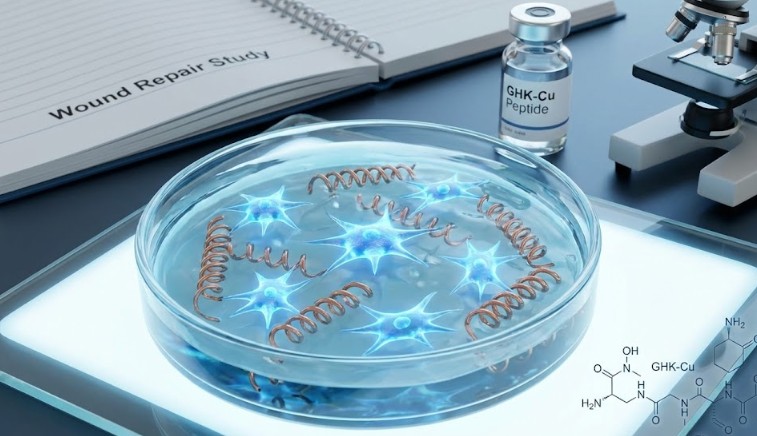
GHK stands for glycine, histidine, and lysine, and “Cu” means the peptide is paired with a copper ion, which shifts how it behaves in tissue. Your body makes small amounts of this peptide in fluids and tissues, and published work suggests levels drop with age.
In lab and skin model studies, GHK-Cu shifts how fibroblasts behave, and fibroblasts are the cells that produce much of the collagen and elastin that keep skin firm. In real skin care use, people reach for it when they want a smoother texture, softer fine lines, and a firmer feel over time.
If you want a broader peptide overview before you pick one, start with peptide therapy.
A short history: wound repair first, then skin and scalp care
GHK-Cu got attention in early wound research because it showed signals tied to tissue repair, collagen organization, and reduced inflammation in skin models after injury. Over time, those same signals made it popular in cosmetic formulas meant for photoaged skin, uneven texture, and post-procedure recovery.
Later, the hair world noticed copper peptides too, since scalp inflammation and poor follicle signaling can push follicles into a “rest” phase and make new hairs come in thinner. That early crossover is why copper peptides still show up in luxury serums, scalp sprays, and clinic talks.
Why copper matters for skin
Copper is a trace mineral your body uses in many enzymes, and several of those enzymes touch collagen, elastin, pigment, and antioxidant defense in skin over time. One copper-dependent enzyme, lysyl oxidase, helps “tie” collagen fibers together so the dermis keeps its strength and bounce as years pass.
Copper is also used in superoxide dismutase, an enzyme that handles oxidative stress, and oxidative stress is one driver of fine lines and dull tone after years of UV exposure. This does not mean more copper is always better, but it helps explain why copper shows up again and again in skin science.
Why copper matters for hair
Hair follicles are active mini organs that rely on blood flow, oxygen, hormones, and local immune signals to stay in the growth phase and keep producing thick strands. Copper shows up in enzymes tied to blood vessel signals and pigment biology, so it often appears in hair growth conversations.
Copper peptides are not a substitute for thyroid checks, iron checks, or hormone workups, yet they can be one piece of scalp care when the pattern is thinning and poor hair quality. That is why the copper peptide topic sits between skin care and hair care, and why people search for it in both places.
What GHK-Cu does in skin cells
Skin aging has two tracks: the “time” track and the “sun” track, and both lead to thinner collagen and more collagen breakdown in the dermis over the years. GHK-Cu is studied because it may tilt skin cell signaling toward repair, with more matrix building and less matrix breakdown in certain models.
Researchers have reported that GHK-Cu can shift gene activity tied to collagen, elastin, and glycosaminoglycans, and it can also affect enzymes that chew up collagen in aged skin models. In plain words, it may move the balance toward “make more, break less,” depending on the setting and the dose.
GHK-Cu for fine lines and wrinkles
Fine lines form when the dermis gets thinner, and the surface folds more easily, and more set lines add repeated muscle movement and long-term UV injury on top of that. A copper peptide cannot stop muscle motion, yet it may make the skin’s cushion thicker and more elastic over time.
Small human cosmetic trials of topical copper peptide formulas have been linked with smoother texture and better elasticity after weeks of steady use, though the size of the shift varies by skin type. Variation is normal because skin thickness, sun history, and sleep patterns differ, even when two people use the same bottle.
GHK-Cu for “crepey” skin and loss of bounce
“Crepey” skin often shows up on the neck, under the eyes, and on the hands, where skin is thinner, and sun exposure is common, even in people who use sunscreen now. The look is usually a mix of collagen loss, water loss from the barrier, and subtle laxity that shows in certain lighting.
Topical copper peptides may help this look when the main driver is dermal thinning, but they work slowly and need steady use over months, not days. If the main driver is laxity, a procedure that heats the dermis can match the goal better than a serum alone.
GHK-Cu for redness, irritation, and post-breakout marks
Not every “aging” complaint is a wrinkle, and many people first notice uneven tone, redness, and marks that stay after a pimple is gone. A calm look often comes from reduced inflammation, a stronger barrier, and better repair after small injuries.
Copper peptides are studied for anti-inflammatory signaling and wound repair effects, which may help the skin look calmer over time when irritation is part of the picture. If your main issue is pigment or redness, light-based treatments can target color more directly than a peptide alone.
GHK-Cu for acne scars and texture
A serum sits on the surface layer, even when it is well-made, so more severe acne scars can stay stubborn with topical care alone for months or years. Collagen induction procedures create controlled injury, and that sends a stronger rebuild signal into the dermis, where scar texture begins.
Many clinics pair copper peptides with procedures because microchannels can raise delivery into the upper dermis in the first hours after treatment, when the barrier is open. The pairing is not a guarantee, yet it can fit a plan for texture, pores, and scar edges, when the rest of the care is gentle.
Where GHK-Cu fits when you also use injectables
Wrinkles can come from more than one driver, so you may need more than one tool, depending on what you see in the mirror and what your face does when you talk and smile. If muscle movement is the driver, wrinkle relaxers can soften the line, while peptides focus more on skin quality over time.
Volume loss is another driver, and fillers can lift folds when volume is the main issue, while copper peptides cannot replace lost volume in one area. A plan can use more than one tool, but spacing and aftercare matter for irritation control and steady healing.
Hair basics: why follicles slow down
Hair growth is not steady; it moves through a cycle, with a long growth phase, a short transition phase, and a rest phase before shedding happens. In androgenetic hair loss, follicles miniaturize over time, so each new hair can come in thinner, shorter, and less visible.
Shedding can also rise after fever, surgery, major stress, or rapid weight loss, and that pattern is often called telogen effluvium. In that case, the follicle is still alive, yet it needs time and calm signals to return to a normal cycle.
GHK-Cu and hair growth: what we know
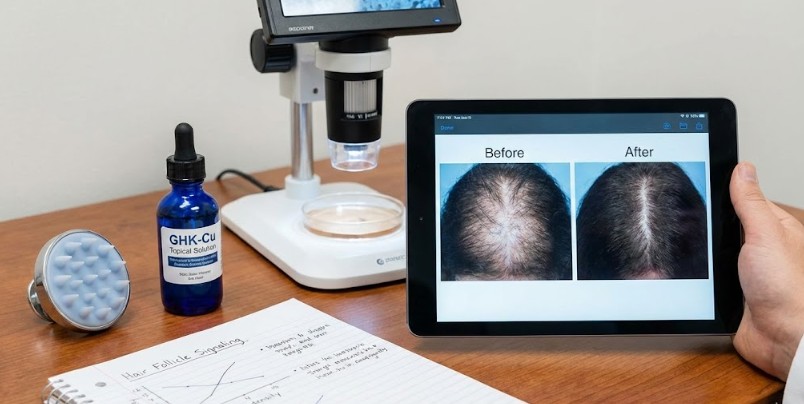
Copper peptides gained fame in hair care because early studies and patents reported thicker hair and higher counts in some users with androgenetic loss, measured over several months. The proposed biology includes follicle signaling, reduced inflammation around follicles, and scalp conditions that make a growth phase easier to sustain.
Human data is still limited, yet topical copper peptide formulas have been studied in small trials that measured hair count or hair thickness over time, rather than feelings alone. Most visible results take time, because new hair must grow above the scalp and then add enough density to shift the look.
Copper peptide myths that waste time
A lot of online posts treat copper peptides like a fast fix, or like a one-product cure for every type of hair loss and every type of wrinkle, and that framing leads to frustration. Biology is slower and more varied than marketing copy, so a slow plan can still be a good plan.
The second myth is that “more is always better,” and that often triggers irritation, more breakouts, and more redness, especially when someone layers too many actives at once. A calm plan with steady use usually beats a crowded plan with ten new products.
Topical vs microneedling vs injections: picking a route
People often put “GHK-Cu” into one bucket, yet the delivery route can alter the feel, risk, and results, even when the ingredient is the same. Topicals are low barrier entry, microneedling can raise penetration, and injections or mesotherapy require clinic sterility and close follow-up.
The best route depends on your goal, your downtime tolerance, and your skin type, along with acne risk and pigment risk in your case. A consult can also sort whether your main driver is collagen loss, pigment, laxity, or a mix.
Topical serums: who they fit
Topical GHK-Cu is often used for fine lines, texture, and post-procedure recovery, because it is easy to add and easy to stop if irritation shows up. It is also a common entry point for people who are curious but not ready for needles.
Topicals can fit well when your goal is skin quality, not a “lift,” and when you use sunscreen and gentle cleansing most days. They also work well as long-term maintenance after in-clinic collagen induction, when you want steady signals at home.
Microneedling: why it pairs well with peptides
Microneedling opens short-lived channels that can let actives reach layers they would not reach from a normal serum, especially during the first hours after a session. That is why some clinics use peptides during the recovery window, when the barrier is open, and the skin is focused on repair.
After microneedling, product choice matters, since acids, fragrance, and harsh exfoliants can sting through fresh channels and trigger inflammation that lasts longer than needed. A clinic aftercare plan is safer than trial and error.
Mesotherapy or injections: why this is not DIY
Some clinics use GHK-Cu in mesotherapy plans for the face or scalp, yet this route adds more risk than topical use, since it involves needles, sterile technique, and careful planning. Injections can also cause swelling and bruising, and misuse can raise infection risk.
How to use GHK peptide in a routine
A routine works best when it stays simple, so you can tell what is doing what and avoid flares from too many new activities layered at once. Start with one new product at a time, then watch for redness, itching, bumps, or dryness over a full week.
Many people apply copper peptides after cleansing and before a basic moisturizer, then use sunscreen during the day to protect new collagen from UV injury. If you also use retinoids or exfoliating acids, keep them on different nights at first, since stacking can irritate.
How to choose a copper peptide product
Not all copper peptide products feel the same, even when they list “copper tripeptide-1” on the label, because concentration, pH, other actives, and packaging all alter the feel. A formula that feels calm on one person can sting on another, even with the same ingredient list.
If your skin is reactive, avoid formulas with heavy fragrance, strong acids, and too many actives in one bottle, since that can blur what triggered the reaction. A plain formula, used steadily, gives clearer feedback and makes it easier to spot patterns.
Where in-clinic care fits
Topical care is slow and steady, but procedures can send a stronger collagen signal in one session than a serum can send in a month, and that difference matters for scars and laxity. That is why many people blend home care and in-clinic care, then keep maintenance simple between sessions.
In a clinic setting, GHK-Cu can show up as part of post-procedure care or in facial or scalp mesotherapy plans, based on skin type and goals. The best blend depends on acne history, pigment risk, and how much downtime you can handle, since redness and flaking vary by method.
What to expect: a realistic timeline

Copper peptides do not work like fillers or wrinkle relaxers, where you may see a shift in days, because collagen remodeling takes time in the dermis. Hair growth takes even longer because hair cycles move slowly, and new hairs need months to add visible density.
Many people notice a calmer feel first, with less tightness and a smoother surface in four to eight weeks, while bigger texture shifts can take three to six months with steady use. Hair density shifts often take three to nine months, since new hair must grow long enough to shift the look of a part.
Side effects: what is common and what is not
Topical copper peptides can cause mild stinging, redness, or small bumps in some people, especially when the barrier is already irritated or when too many actives are layered. If you get acne flares, start with a smaller amount and avoid pairing it with strong acids on day one.
Injections add risks like bruising, swelling, pain, and infection from poor technique, so this route belongs in a clinic setting with sterile protocols. If you have Wilson’s disease, a copper allergy, or you are pregnant or nursing, talk with a clinician before any copper plan.
Stress, sleep, and immune signals: why skin and hair react
When stress runs high, cortisol can rise, sleep can break, and blood sugar can swing, and those shifts can show up on the face and scalp fast, even in people with a good routine. Many people see more acne, more redness, and more hair shedding during long stress seasons.
Immune signaling also touches skin repair, since inflammation can slow collagen repair and can push hairs into a rest phase after illness or infection. A plan that ignores sleep and stress can stall, even when your skin care shelf is full.
Nutrition and minerals: where copper fits, and where it does not
Copper peptides are not the same as copper supplements, and using a topical peptide does not fix a true mineral deficiency, since deficiency has many causes. If you worry about low minerals, testing and clinician input are safer than guessing, because too much of a mineral can also cause problems.
Skin and hair also rely on protein, iron, zinc, vitamin D, and vitamin C, and gaps can show up as shedding, slow wound repair, and fragile nails that split. That is why a good skin and hair plan often starts with basics, not just the newest serum.
Pairings people ask about
Copper peptides can sit inside a larger plan, yet pairing only makes sense when the pairing matches your top goal, like pigment, laxity, scars, or shedding, and when your skin tolerates the combo. Pairings are common in clinics because procedures can send a stronger collagen signal than serum alone, and then home care keeps the signal steady.
Below are common pairings, with a short note on what each one tends to target.
GHK-Cu and PRP for the face
PRP uses your own platelets, and it is used to nudge repair signals in skin, often paired with microneedling when texture and fine lines are the main issues. Some clinics then use peptides during recovery because the barrier is open and the skin is in repair mode.
GHK-Cu and PRP for hair
PRP hair sessions are used for androgenetic loss and diffuse thinning, and people often pair PRP with steady scalp care between sessions to keep signaling consistently. Copper peptides show up here because of their scalp signaling history and their popularity in hair products over time.
GHK-Cu and RF tightening
Heat-based RF can tighten by heating the dermis, while peptides are more about daily signaling and repair cues that stay gentle between sessions. The pairing can make sense when someone wants procedure-level tightening plus calmer day-to-day skin care.
GHK-Cu and hydration or IV nutrients
Skin repair needs amino acids and vitamin C, and poor intake or high stress can slow repair and make skin look flat for longer than you expect. Some people use IV nutrients during heavy travel, high training loads, or recovery windows when food intake is not steady.
FAQ
Is GHK-Cu the same as “copper peptides” in luxury serums?
GHK-Cu is one of the best-known copper peptides, but some formulas use other copper complexes or blends with different feel and stability, so the label matters. Read the ingredient list and start slowly, because “copper peptide” can mean more than one molecule.
Can GHK-Cu replace retinol?
No, because retinoids act through different receptors and have a strong track record for photoaging and acne, while copper peptides work through different signals and targets. Many people rotate them on different nights to keep irritation down.
Can I use GHK-Cu after microneedling?
Many clinics use gentle peptides after microneedling, yet product choice matters because fragrance, acids, and strong actives can sting through fresh channels. Follow aftercare instructions rather than guessing at home.
Does GHK-Cu work for acne scars?
It can be one piece of a texture plan, yet more severe scars often need procedures that create collagen remodeling in the dermis, where the scar begins. A series of sessions, paired with steady home care, tends to beat one product alone.
Does GHK-Cu work for hair loss in women?
It may help scalp signals and hair quality, yet hair loss in women has many causes, like iron status, thyroid shifts, postpartum shedding, and androgen shifts that vary by age. Pattern recognition and lab work matter before you pick a single tool.
Can copper peptides darken skin?
Copper is tied to pigment biology, yet most people do not see tanning from topical copper peptides in normal use, because doses are small and skin handling varies. If you are prone to melasma, keep sun exposure low and ask a clinician before heat-based procedures.
Can I use copper peptides with vitamin C?
Some people use vitamin C in the morning and copper peptides at night to reduce irritation, since layering many actives can sting on reactive skin. If your skin is sensitive, spacing often works better than mixing.
How long should I try it before I judge the results?
Give skin eight to twelve weeks before judging fine lines and texture, since collagen remodeling is slow and small shifts take time to show in real light. Give hair three to six months before judging density, since hair needs time to grow above the scalp.
Is injectable GHK-Cu better than topical?
Not always, because “better” depends on your goal and how your skin reacts, and injections add more risk and more cost than a topical bottle. That tradeoff only makes sense when a clinician sees a clear reason in your case.
Where do I start if I want skin and hair gains in one plan?
Start by naming the top issue you want to fix first, then add one tool at a time so you can track irritation and progress without guessing. A consult can also sort whether a procedure, a peptide, or both makes sense for you.
Your next step
If you want to try GHK-Cu at home, start with GHK-Cu and keep the rest of your routine calm for two weeks so your skin can tell you how it reacts. If you want an in-clinic plan that can pair GHK-Cu with PRP or microneedling, you can book an aesthetics visit and talk through goals, downtime, and skin type.