

Blog
Microneedling for Acne Scars and Fine Lines: Collagen Induction Therapy Explained
A mirror can be blunt in the worst way: a pitted mark from old acne, a crease that looks more noticeable under bright light, or pores that seem larger each year. If creams and peels have not moved the needle, you may be ready for a procedure that nudges the skin to rebuild.
If you feel stuck with pitted scars, enlarged pores, or early lines, collagen induction therapy can push new collagen growth while leaving most of the surface layer intact and calm. This page explains microneedling, PRP microneedling, RF microneedling, and fractional laser resurfacing in plain language.
What “collagen induction therapy” means
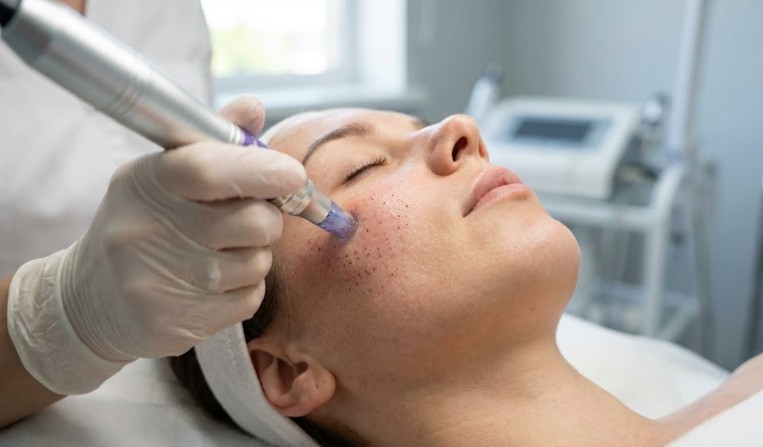
Collagen induction therapy is a group of treatments that create tiny, controlled injuries. Your skin reacts by starting a repair cycle that can lay down new collagen over time.
Think of it as a reset signal. The skin gets a reason to patch small damage instead of living with it.
Why collagen matters for scars and wrinkles
Collagen is the main “scaffold” in the dermis. When that scaffold is thin or broken, the surface can sink into pits or fold into lines.
Most creams sit on the surface. Procedures reach lower layers where scars and fine lines start.
Why acne scars look the way they do
Acne can inflame the lower skin layer. When the inflammation is strong, the body may break down collagen faster than it can rebuild it.
The result is often an atrophic scar. That means the scar sits below the skin surface.
The three acne scar types you see most
Each scar type acts a bit differently, and that affects which procedure tends to work best.
- Rolling scars: wide, soft dips that look worse when light hits from the side.
- Boxcar scars: round or oval “craters” with sharper edges.
- Ice pick scars: narrow, narrow holes that look like a tiny puncture.
Ice pick scars often need add-on procedures. Many people use a mix, not one single method.
Why “acne marks” are not always scars
Some “scars” are color, not texture. Red or brown marks can linger after acne heals, even when the surface is smooth.
Color often responds to different tools than texture. That is where light-based treatments can fit better than needles.
Microneedling for acne scars: how it works
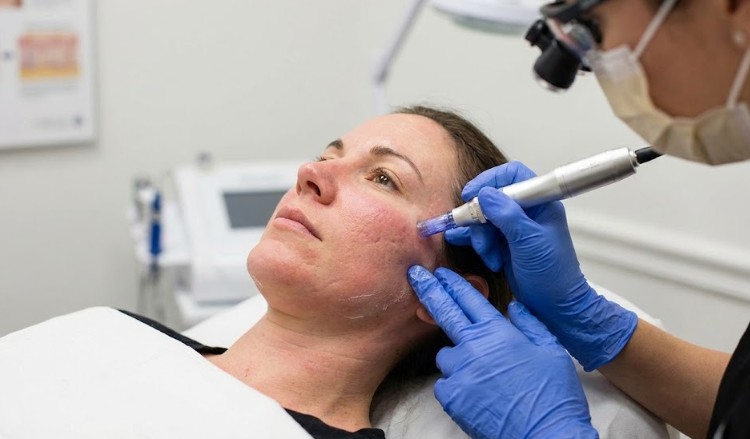
Microneedling uses sterile needles to create microchannels in the skin. These channels trigger wound repair and can lead to new collagen over weeks and months.
A device may be a roller, a stamp, or a pen. Clinics often use a pen so needle length and speed can be set for each area.
What can microneedling do for atrophic scars?
Microneedling can soften the edge of a boxcar scar. It can also smooth the “waves” of rolling scars by rebuilding collagen under the dip.
Ice pick scars usually shift less. They are far below the surface and narrow, so the fix often needs something more targeted.
What microneedling can do for fine lines?
Microneedling is also used for photoaging and early wrinkles. In one trial, four monthly sessions were linked with measured shifts in skin density and elasticity over follow-up.
This matters because wrinkles are not only “surface folds.” They often reflect collagen loss under the surface.
How many sessions are typical
Most people need a series. A common range is three to six sessions spaced about four weeks apart.
Scars that are older or deeper may need more. Most plans also include a check-in visit after the series to decide on maintenance.
Pain and numbing
Most clinics use numbing cream. That takes the edge off, but you may still feel pressure or a scratchy sensation.
Pain also depends on needle length. Longer passes can feel sharper, especially on the upper lip and forehead.
PRP microneedling: what changes when you add “liquid gold”
PRP stands for platelet plasma with concentrated platelets. It is made from your own blood, spun down so platelets become concentrated in a small amount of plasma.
Platelets carry growth factors that signal repair. When PRP is used with microneedling, it can enter microchannels and reach the dermis.
PRP vs microneedling alone for acne scars
When microneedling and PRP are compared to microneedling alone, many studies show better scar scores with the combo.
PRP is not a magic switch. It works best as part of a series, with good aftercare.
What PRP microneedling can feel like
The microneedling part feels the same as usual. The PRP part can feel cool and wet, like a serum being pressed into the skin.
Many people look red right after. Swelling may peak on the first day, then settle.
Who tends to like PRP microneedling
PRP microneedling is often chosen by people who want collagen gains with mild downtime. It can be a fit for early lines, uneven texture, and some scar types.
It can also be used as a “bridge” after a laser series. Some clinics use PRP after laser sessions to calm the skin during the first days.
RF microneedling (Morpheus8): needles plus heat
RF microneedling sends radiofrequency energy through the needle tips. The goal is to heat the dermis in small columns, while the surface gets less injury than a full resurfacing laser.
This combo can tighten skin and smooth texture. It is often used for acne scars, pores, and laxity that shows up as early sagging.
LIVV offers Morpheus8, which combines microneedling and RF.
How RF microneedling compares to laser for scars
Both RF microneedling and fractional CO2 laser treat skin in tiny “fractions.” That can shorten downtime versus a full-field resurfacing.
A split-face trial found that ablative fractional CO2 laser and microneedle RF gave similar texture gains after one session, but with different side effects and pain scores.
A safety note you should not skip
In October 2025, a federal safety notice listed burns, scarring, fat loss, disfigurement, and nerve damage as reported complications with certain uses of RF microneedling devices.
This does not mean RF microneedling is “banned.” It does mean provider skill, device choice, settings, and skin type matter a lot.
When RF microneedling may be a better fit than standard microneedling
RF microneedling can reach more noticeable remodeling for some people. It can also address mild laxity at the same time as texture.
It may be preferred when skin firmness is the main complaint. It can also be a good fit when someone wants to avoid the longer downtime of aan blative laser.
Fractional laser resurfacing: what it is and why it works
Fractional lasers treat skin in a grid pattern. They leave “skip areas” between treated columns so the surface can heal faster.
There are two big families. Ablative lasers remove tiny columns of skin, while non-ablative lasers heat lower layers without removing surface skin.
Fractional CO2 laser for acne scars
A fractional CO2 laser is a common option for atrophic acne scars. It can smooth scar edges and tighten the surface, but it often comes with more downtime than microneedling.
A 2024 split-face study in skin of color found that fractional CO2 laser improved acne scars more than microneedling, but post-inflammatory hyperpigmentation was more common on the laser side.
Fractional laser for wrinkles
Lasers can also reduce fine lines by remodeling collagen. Ablative fractional lasers tend to give the largest shift, but they can require more recovery time.
Non-ablative fractional lasers can be gentler. They may need more sessions to reach a similar look.
Where lasers may fall short
Lasers can smooth the texture. They may not fully fix rolling scars without subcision or filler.
They can also flare pigment in darker skin types. That risk can be lowered with good prep, good settings, and strict sun avoidance, but it can’t be erased.
PRP vs laser for scars: a practical comparison
Both methods can work. The better pick is usually the one that matches your scar type, skin tone, and how many days you can spend healing.
Here is a plain table to compare the main options.
| Treatment | Best fit for | Typical downtime | Main risks |
|---|---|---|---|
| Microneedling | mild–moderate texture, early lines | 1–3 days pinkness | irritation, breakouts, infection if aftercare is poor |
| PRP microneedling | similar to above, plus faster “calm down” for some | 1–3 days, sometimes less | bruising from the blood sample, irritation |
| RF microneedling | texture + pores + mild laxity | 2–7 days, depending on settings | burns, scarring, fat loss, pigment shifts |
| Fractional CO2 laser | deeper texture and boxcar scars | 5–14 days depending on depth | pigment shifts, longer redness, infection risk |
If your main issue is red or brown marks, you may get more from light-based tools. LIVV offers IPL, which targets pigment and redness.
Add-on options that often pair with collagen induction
Needles and lasers can rebuild collagen. Some scars still need a “release” or a fill to lift the dip.
This is common with rolling scars. A tether under the skin can keep the surface pulled down, even after months of collagen work.
Subcision for rolling scars
Subcision uses a needle or cannula under the scar to break fibrous bands. When the band is released, the scar can rise right away.
Subcision is often paired with microneedling or laser therapy later. That way, collagen forms in the new space.
TCA CROSS for ice pick scars
TCA CROSS uses a strong acid placed only inside an ice pick scar. It creates a tiny, controlled injury that can narrow the hole over a series.
It can leave a scab for a few days. It also needs careful handling, since the acid is strong.
Fillers for depressed scars and early folds
A filler can lift a scar that sits below the surface. It can also soften a fold that is partly from volume loss.
If you are curious about filler basics, read about dermal fillers.
When lasers or RF are not the best next step
If you are pregnant, have an active skin infection, or have uncontrolled acne, your clinician may pause procedures. A calm, steady plan can beat rushing into a hot device too soon.
If you are thinking about surgery for laxity, this page may help frame the tradeoffs: facelift.
Peptide-infused microneedling and “after-serums”
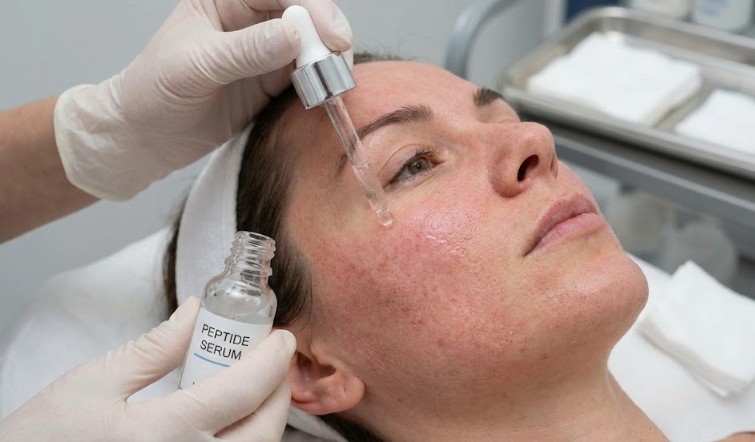
After microneedling, the skin has temporary microchannels. That makes people wonder if serums can reach deeper than usual.
Some clinics use simple, sterile topicals after a session. Others use growth factor serums or peptide blends designed for post-procedure skin.
What peptides can and can’t do in this setting
Topical peptides can signal repair at the surface and upper dermis. They do not replace the mechanical effect of needles, and they do not “erase” scars overnight. Copper peptides are popular in skin care.
A lab study also looked at microneedle-assisted delivery of a copper peptide through skin models.
A safety note on post-needling products
Do not put random products into fresh channels. Stick with what your clinic recommends, and avoid acids, retinoids, and harsh actives until your skin feels normal again.
If you use makeup, wait until the skin barrier has calmed. That can lower the odds of clogged pores and irritation.
How to pick the right therapy for your skin
A good plan starts with two questions. Is your issue mostly texture, or mostly color?
The third question is time. How many days can you spend red, flaky, or swollen?
If texture is your main issue
Start by labeling the scar type. Rolling scars may need subcision, boxcar scars may do well with fractional laser, and mixed scars often do well with microneedling series.
If you also have early lines, microneedling can address both at once. RF microneedling can be a fit when laxity and pores are front and center.
If color is your main issue
Redness and brown spots often respond to light and pigment tools. IPL can reduce redness and sun spots, but it does not fill in a depressed scar.
Daily sunscreen can also shift the look of marks over time.
If you can’t take much downtime
Standard microneedling and PRP microneedling are often the easier fit. Many people go back to work in a day or two with careful skin care.
RF microneedling can also be “low downtime,” but that depends on settings. The fractional CO2 laser usually has the most downtime of the group.
Combining treatments without wrecking your skin
A single method rarely hits every scar type. Many plans use a sequence across a few months.
The order matters. You want to calm inflammation first, then build collagen, then polish color and texture.
A common sequence for acne scars
Step 1 is acne control. Active acne can keep making new marks, so treat that first.
Step 2 is a microneedling series, with or without PRP. Step 3 may add a fractional laser session for scar edges, then a calm-down period.
Step 4 is pigment work if you still have red or brown marks. IPL may fit here.
A common sequence for early wrinkles
Step 1 is sun control. A tan raises burn risk with energy devices and can raise pigment shifts after treatment.
Step 2 is collagen building with microneedling, RF microneedling, or a fractional laser plan. Step 3 may add RF skin tightening or injectables based on your goals.
Treat fine lines without surgery: what works when you want subtle
Fine lines come from a mix of sun damage, collagen loss, and repeated muscle movement. A good plan targets the driver, not just the line you see in one mirror angle.
When the line is from repeated facial movement
Forehead lines, frown lines, and crow’s feet often come from muscle motion. A wrinkle relaxer can soften these lines by relaxing the muscle that creases the skin.
When the line is from skin texture and thinning
Textural lines can respond well to microneedling, PRP microneedling, RF microneedling, or fractional laser. These methods rebuild collagen over time, which can soften the look of “etched” lines.
When the issue is volume loss
Some folds form because facial fat pads shift with age. In that case, collagen work can help, but it may not lift the fold on its own.
A filler or biostimulator can add back volume in a precise way. Many people combine this with collagen induction, so texture and volume move in the same direction.
Skin prep that makes procedures go smoother
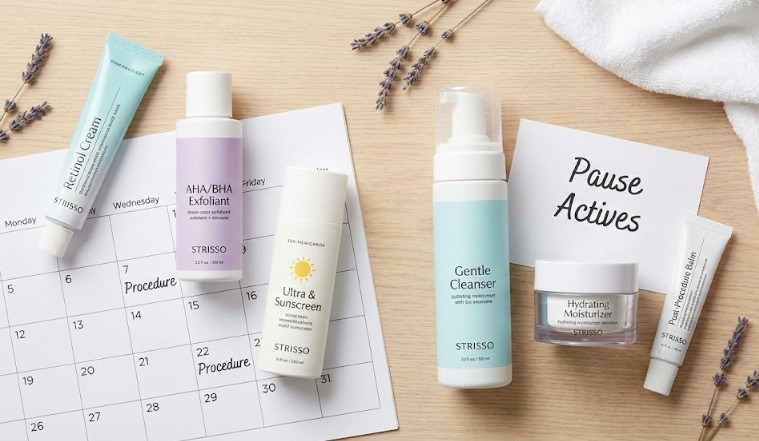
The weeks before and after a procedure can affect your outcome. Sun, harsh activities, and friction can turn a calm heel into a long red stretch.
Two weeks before
Avoid tanning and skip new skin products. Tell your clinician if you get cold sores, since prevention meds may be needed.
The first week after
Keep it gentle. Many clinics ask you to pause retinoids and acids until peeling and tightness are gone.
What to expect: timeline and aftercare
Most collagen shifts take time. Many people see the early “glow” first, then texture shifts later as collagen matures.
A good rule is to track photos at the same angle and light. Month-to-month photos show shift better than daily mirror checks.
Right after microneedling
Your skin may look red, like a sunburn. You may also see pinpoint dots or light swelling.
Use a gentle cleanser and a bland moisturizer. Skip sweat, hot showers, and heavy makeup for the first day or two.
Right after PRP microneedling
Expect the same redness, plus a sticky serum feel. Many clinics ask you to leave the PRP on for a set time.
Do not scrub it off right away. Follow your clinic’s timing and skin care plan.
Right after RF microneedling
You may see redness and mild swelling. Some people also see grid-like marks for a few days.
Avoid heat, sun, and harsh activities until the skin is calm. Treat this like a wound-healing window, not like a normal facial.
Right after the fractional CO2 laser
Expect more downtime. Skin may ooze, crust, and peel as it heals.
Aftercare is strict. You will likely use gentle cleansing, heavy moisture, and sun avoidance until the surface is sealed.
Risks, who should skip, and what to tell your clinician
These are medical procedures. They are low risk in skilled hands, but they are not “no risk.”
Tell your clinician about active acne, cold sores, keloids, bleeding issues, and any immune-suppressing meds. Also mention recent isotretinoin use.
Pigment shifts (dark spots or light spots)
Pigment shifts can happen after needles or lasers, but the risk rises with heat and stronger injury. Darker skin types can still do these procedures, but the plan needs care.
Strict sun avoidance is not optional. A week of UV exposure can undo a month of careful work.
Infection and acne flares
Any break in the skin barrier can let bacteria in. This is why sterile tools and clean aftercare matter so much.
Some people flare with acne after occlusive ointments. A clinic can adjust aftercare if you are acne-prone.
A note on at-home devices
At-home rollers can spread bacteria and can cause uneven injury. RF microneedling devices should not be used at home, per the 2025 safety notice linked above.
Questions people ask before booking
Is microneedling good for acne scars?
Yes, it can reduce the look of atrophic acne scars, especially rolling and mild boxcar scars. It tends to shift ice pick scars less, and those may need add-ons.
Is PRP microneedling better than microneedling alone?
Often, yes. Controlled studies and pooled analyses show the combo can beat microneedling alone on scar scores, though results differ person to person.
PRP vs laser for scars: which gives faster results?
Laser can give a larger jump per session for some scar types, but downtime is often longer. PRP microneedling tends to be gentler, so people accept a slower shift for fewer days off.
Can microneedling treat fine lines without surgery?
Yes, it can soften early lines by rebuilding collagen. It will not replace a facelift for major laxity, but it can refresh texture and tone.
How long does it take to see results?
Some people notice a glow in days. Texture shifts usually show over weeks, with further gains over a few months as collagen matures.
How long do results last?
Results can last many months, especially when sun exposure is controlled. Many people do a maintenance session once or twice a year, based on goals.
Can darker skin tones do these procedures?
Often, yes. The plan may use milder settings and strict sun prep, and some people avoid deeper ablative lasers due to pigment risks.
Can I do microneedling if I still get acne?
Active acne raises infection risk and can spread bacteria. Many clinics treat acne first, then do needling once breakouts are controlled.
What if I have melasma?
Heat and inflammation can flare melasma. A clinic may steer you toward gentler plans, pigment-safe settings, and strict sun control.
What should I avoid before and after?
Avoid tanning, sunburn, and harsh activities before and after. Ask your clinician about retinoids, acids, blood thinners, and cold sore prevention if you are prone.
Ready to stop editing your skin in photos?
You do not need a single “perfect” treatment. You need the right sequence for your scar type, your skin tone, and your schedule.
If you want an in-person plan, you can book an aesthetics visit with LIVV Natural.