

Blog
PRP, Exosomes, or Stem Cells: How to Choose the Right Regenerative Therapy for Your Condition
Your body repairs itself constantly. Cut your skin, and new tissue forms. Fracture a bone, and it knits back together. Tear a muscle, and the fibers regenerate.
But this repair machinery slows with age. Cartilage wears down faster than it rebuilds. Tendons heal incompletely. Joints degenerate year after year with no reversal in sight.
Regenerative medicine offers a different approach. Rather than masking pain with medications or replacing joints with surgery, these therapies work to restart the body’s own repair processes—stimulating tissue regeneration, reducing inflammation, and restoring function.
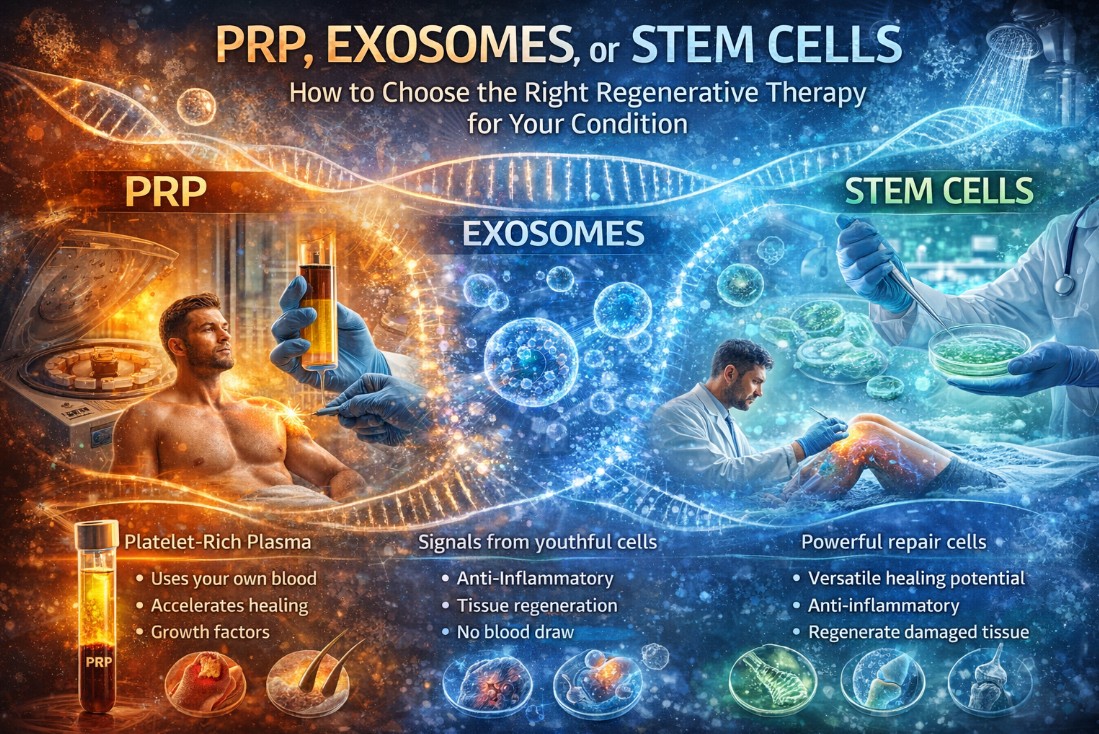
The three primary regenerative treatments available today are PRP (platelet-rich plasma), exosome therapy, and stem cell therapy. Each works differently, targets different conditions, and produces different outcomes. This PRP exosomes stem cells comparison will help you understand how each therapy functions and which option makes sense for your specific situation.
What Is Regenerative Medicine?
Traditional medicine typically treats symptoms. You have knee pain, so you take anti-inflammatory drugs. The pain persists, so you get a cortisone injection. The relief fades, so you schedule joint replacement surgery.
Regenerative medicine takes a different path. These treatments use biological materials—your own cells, concentrated growth factors, or cellular signaling molecules—to stimulate actual tissue repair. The goal isn’t to mask the problem. The goal is to fix it at the cellular level.
This approach draws on the same healing mechanisms that close wounds and mend bones naturally. When you cut yourself, platelets rush to the site and release growth factors that trigger tissue regeneration. When you injure a ligament, stem cells in the surrounding tissue differentiate into ligament cells to rebuild what was damaged.
Regenerative therapies concentrate and direct these natural processes to areas where healing has stalled or where tissue damage exceeds the body’s ability to self-repair.
PRP Therapy Explained: Healing With Your Own Blood
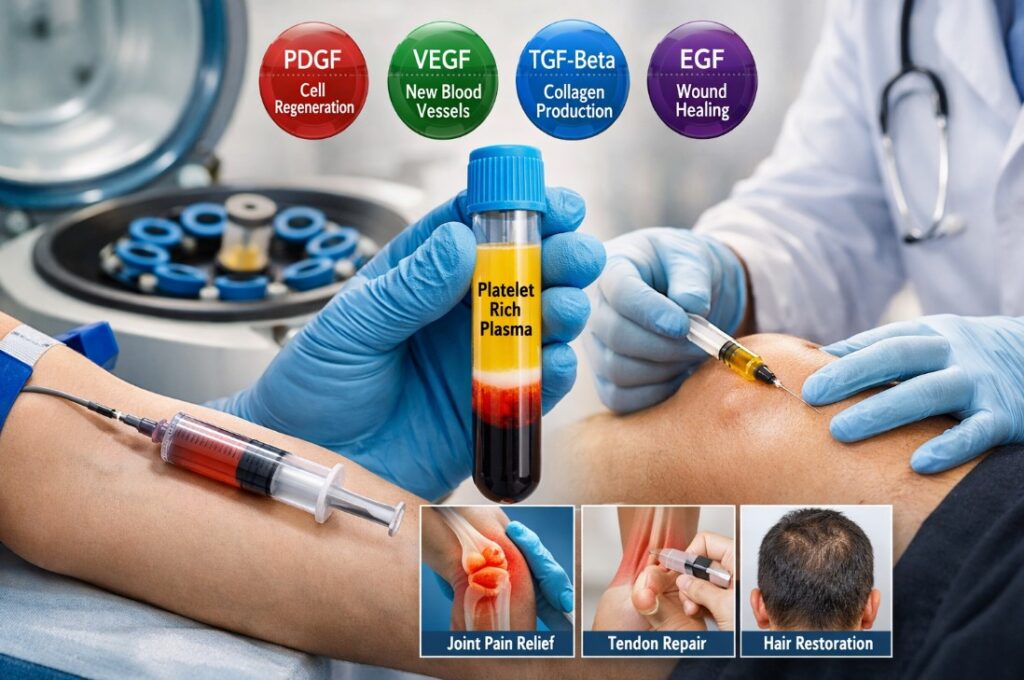
PRP joint therapy uses concentrated platelets from your own blood to accelerate tissue repair. Platelets are blood cells that initiate healing when you’re injured. They contain growth factors—proteins that trigger cell regeneration, collagen production, and new blood vessel formation.
How PRP Works
The process is straightforward. Your provider draws a small blood sample (typically 30-60mL), then processes it in a centrifuge to separate the platelets from red blood cells and other components. The result is a concentrated platelet solution—typically 3-5 times the normal platelet concentration.
This PRP solution is then injected directly into the treatment area. The concentrated growth factors signal surrounding cells to begin repair processes. Key growth factors in PRP include:
- PDGF (platelet-derived growth factor) — stimulates cell proliferation and tissue regeneration
- VEGF (vascular endothelial growth factor) — promotes new blood vessel formation
- TGF-beta (transforming growth factor) — regulates collagen production and tissue remodeling
- EGF (epidermal growth factor) — accelerates wound healing and skin regeneration
What PRP Treats
PRP therapy works best for mild to moderate tissue damage where the body’s repair mechanisms need a boost rather than complete reconstruction.
Joint Pain and Osteoarthritis: A 2024 meta-analysis of randomized controlled trials found that PRP produced statistically and clinically meaningful improvements in both pain and function for knee osteoarthritis patients at 3-, 6-, and 12-month follow-up points compared to placebo. The improvement increased over time rather than fading, with 12-month results showing the strongest benefit.
Tendon and Ligament Injuries: PRP is commonly used for sprains, strains, tennis elbow, rotator cuff injuries, Achilles tendinopathy, and other soft tissue damage. The growth factors stimulate collagen production and accelerate tendon healing.
Skin Rejuvenation: PRP facial treatments use the same principles for aesthetic purposes. The growth factors stimulate collagen and elastin production, improving skin texture, reducing fine lines, and restoring a more youthful appearance.
Hair Restoration: PRP hair therapy delivers growth factors directly to hair follicles, promoting hair regrowth in cases of thinning or pattern hair loss. Multiple studies show increased hair density following PRP treatment courses.
PRP Pros and Cons
Advantages:
- Uses your own blood (autologous), minimizing rejection risk
- Minimally invasive with little downtime
- Lower cost compared to stem cell therapy
- Well-established track record across multiple applications
Disadvantages:
- May require 2-3 treatment sessions for optimal results
- Results develop gradually over weeks to months
- Less effective for severe tissue damage or advanced arthritis
- Quality depends on the platelet concentration achieved
Exosome Therapy Explained: Cellular Messengers for Repair
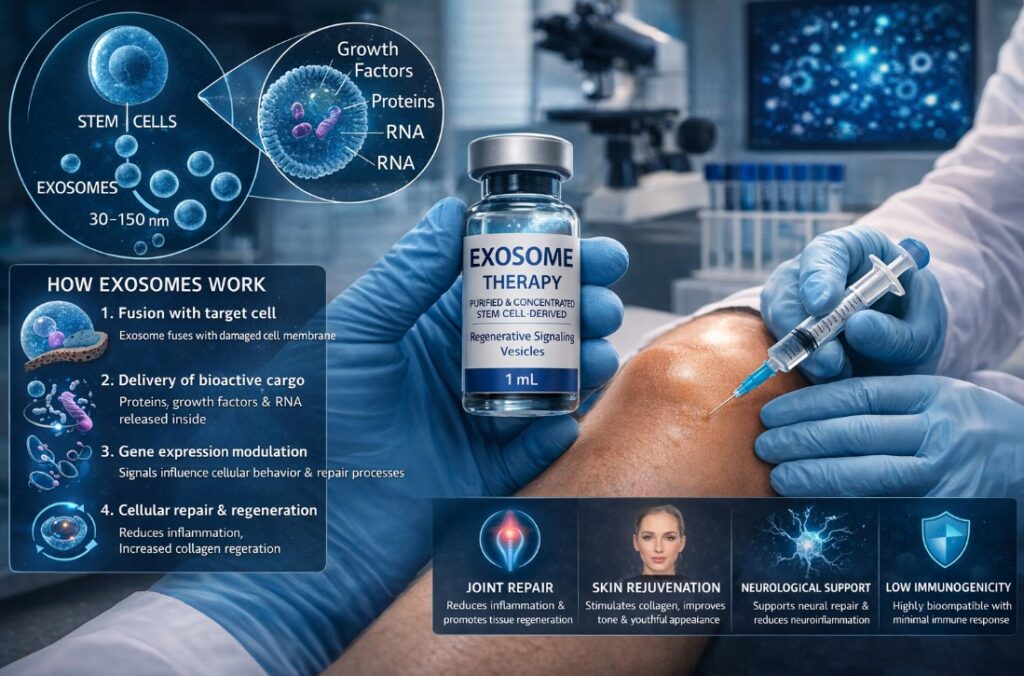
Exosome therapy represents a newer approach to regeneration. Exosomes are microscopic vesicles—tiny packages of proteins, growth factors, and genetic material (RNA)—that cells release to communicate with other cells.
Think of exosomes as cellular mail carriers. They deliver instructions from one cell to another, telling recipient cells what to do. When derived from young, healthy stem cells, exosomes carry potent regenerative signals that can reprogram aged or damaged cells toward repair and regeneration.
How Exosomes Work
Unlike PRP, exosome therapy doesn’t require a blood draw from you. The exosomes are typically derived from young mesenchymal stem cells in a laboratory setting, then purified and concentrated for therapeutic use.
When injected into damaged tissue, exosomes fuse with local cells and deliver their cargo of growth factors, proteins, and RNA molecules. This cargo influences gene expression in recipient cells, triggering:
- Reduced inflammation through immune modulation
- Increased collagen and matrix production
- Enhanced cell proliferation and migration to injury sites
- Activation of dormant stem cells in the surrounding tissue
Research on exosome-based cartilage regeneration shows that mesenchymal stem cell-derived exosomes promote cartilage repair in preclinical models, with no reported adverse events. The exosomes reduced inflammatory markers while stimulating matrix production and chondrocyte activity.
What Exosomes Treat
Exosome therapy is being applied across a range of conditions where cellular communication and repair signaling are impaired:
Joint Inflammation and Early Degeneration: Exosomes modulate the inflammatory environment in joints, reducing the catabolic (breakdown) signals while promoting anabolic (building) activity.
Tissue Repair and Regeneration: The growth factors and RNA delivered by exosomes stimulate tissue repair processes at the cellular level.
Skin Rejuvenation and Anti-Aging: Exosomes can reprogram skin cells toward a more youthful state, increasing collagen production and improving cellular function.
Neurological Support: Emerging applications include cognitive function and neurological health, where exosomes may support neural cell repair and reduce neuroinflammation.
Exosome Pros and Cons
Advantages:
- More potent than PRP due to concentrated signaling molecules
- No blood draw required
- Works systemically (throughout the body) when delivered intravenously
- Low immunogenicity—typically well-tolerated
- Can target both localized and systemic conditions
Disadvantages:
- Newer therapy with less long-term data than PRP
- Higher cost than PRP
- Quality varies by source and preparation method
- Regulatory landscape still evolving
Stem Cell Therapy Explained: The Foundation of Regeneration
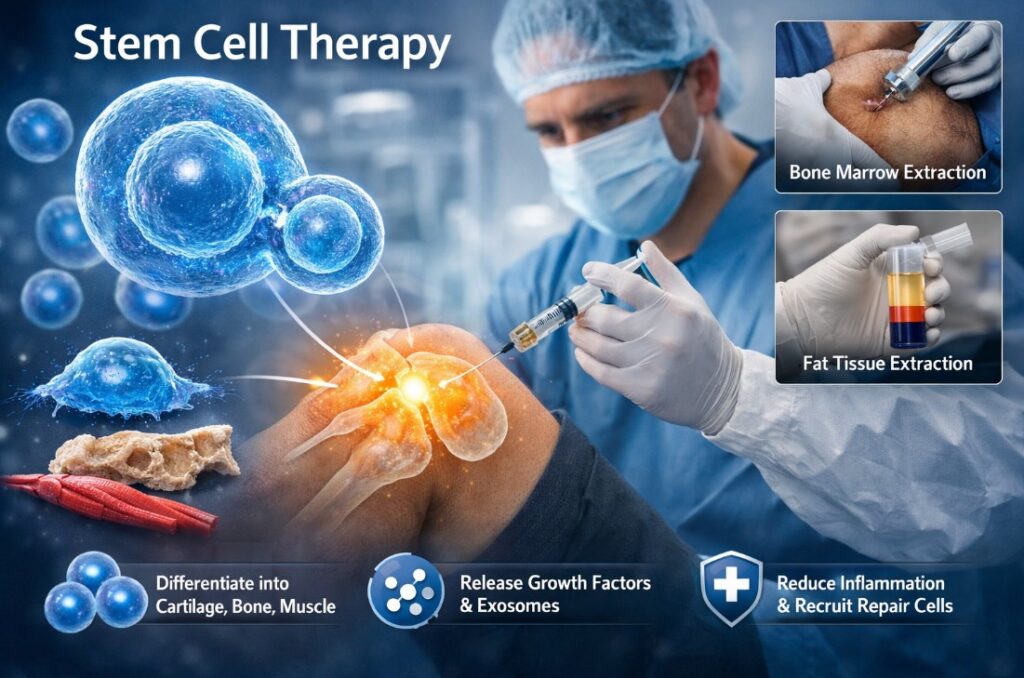
Stem cells are undifferentiated cells—cells that haven’t yet specialized into a specific type. They can divide to produce more stem cells or differentiate into specialized cells like cartilage, bone, tendon, or muscle.
This plasticity makes stem cells the most direct approach to tissue regeneration. Rather than signaling existing cells to repair themselves (like PRP and exosomes do), stem cell therapy provides new cells that can actually become the tissue being repaired.
How Stem Cell Therapy Works
Stem cells for regenerative therapy typically come from two sources:
Bone Marrow Concentrate: Bone marrow is extracted (usually from the hip), processed to concentrate the stem cells and growth factors, then injected into the treatment area. This approach uses your own cells (autologous).
Adipose (Fat) Tissue: Fat tissue contains mesenchymal stem cells that can be harvested through minimally invasive liposuction, processed, and reinjected. This is also autologous.
Once injected into damaged tissue, stem cells can:
- Differentiate directly into the cell type needed (cartilage cells, tendon cells, etc.)
- Release growth factors and exosomes that activate surrounding cells
- Modulate immune responses to reduce inflammation
- Recruit additional repair cells to the injury site
A 2025 Cochrane systematic review of stem cell injections for knee osteoarthritis examined 25 randomized trials with over 1,300 participants. The review found that compared to placebo injections, stem cell therapy may slightly improve pain and function in knee osteoarthritis, though the evidence certainty was rated as low due to the variability in stem cell preparations and study designs.
What Stem Cells Treat
Stem cell therapy is typically reserved for more advanced conditions where tissue damage is substantial:
Severe Joint Degeneration: When cartilage loss is significant, stem cells offer the potential for actual cartilage regeneration rather than just symptom management.
Chronic Tendon and Ligament Injuries: Injuries that haven’t responded to conservative treatment or PRP may benefit from stem cells’ ability to generate new tissue.
Long-Term Tissue Regeneration: For patients seeking the most aggressive regenerative approach, stem cells provide the building blocks for substantial tissue repair.
Stem Cell Pros and Cons
Advantages:
- Most direct approach to tissue regeneration
- Can differentiate into needed cell types
- Potential for lasting structural repair
- May work for conditions too advanced for PRP
Disadvantages:
- Higher cost than PRP or exosomes
- Requires more involved preparation (bone marrow or fat extraction)
- Results develop over months
- Quality depends on donor age and health
- More limited availability than PRP
Side-by-Side Comparison: PRP vs. Exosomes vs. Stem Cells
| Factor | PRP | Exosomes | Stem Cells |
|---|---|---|---|
| Source | Your own blood | Lab-derived from stem cells | Your bone marrow or fat |
| How It Works | Growth factor release | Cellular signaling molecules | Cell differentiation + signaling |
| Invasiveness | Blood draw only | Injection only | Bone marrow/fat extraction |
| Downtime | Minimal | Minimal | Mild (extraction site soreness) |
| Best For | Mild-moderate injuries | Inflammation, systemic repair | Severe degeneration, cartilage loss |
| Number of Sessions | 2-3 typically | 1-3 depending on condition | Often 1-2 |
| Results Timeline | 3-6 months | 2-4 months | 6-12 months |
| Relative Cost | $ | $$ | $$$ |
How to Choose Based on Your Condition
The right regenerative therapy depends on your specific situation—the severity of your condition, your treatment goals, and your timeline for results.
Mild to Moderate Conditions: Start with PRP
If you have early-stage osteoarthritis, a nagging tendon injury that won’t fully heal, or skin/hair concerns, PRP is often the logical starting point. It’s well-established, uses your own blood, carries minimal risk, and costs less than more advanced options.
PRP works particularly well when the body’s repair mechanisms are functional but just need amplification. You’re not missing cells—you’re missing the signal to repair.
Moderate Inflammation or Systemic Concerns: Consider Exosomes
If inflammation is a primary driver of your condition, or if you’re looking for anti-aging benefits beyond a single treatment area, exosome therapy may offer advantages. The potent signaling molecules in exosomes can reprogram cellular behavior at a level beyond what growth factors alone can achieve.
Exosomes also work well as an adjunct therapy. Some protocols use exosomes after PRP or stem cell treatments to accelerate healing and optimize outcomes.
Severe Degeneration or Structural Damage: Evaluate Stem Cells
When tissue damage is substantial—significant cartilage loss, chronic tendon tears that haven’t responded to other treatments, or advanced joint disease—stem cell therapy offers the most direct regenerative approach.
Stem cells can actually become new tissue, not just signal existing cells to repair. For patients facing surgery as an alternative, stem cell therapy represents a less invasive option worth considering.
Specific Applications of Regenerative Therapies
Joint Pain and Osteoarthritis
For mild to moderate osteoarthritis (Kellgren-Lawrence grades 1-3), PRP offers a strong evidence base and favorable cost-benefit profile. For more advanced disease or patients who haven’t responded to PRP, stem cell therapy provides more aggressive regeneration. Exosomes can be used to modulate inflammation and may enhance outcomes when combined with other therapies.
Tendon and Ligament Injuries
Acute injuries often respond well to PRP. Chronic injuries that have failed conservative treatment may benefit from stem cells. Many practitioners use a staged approach—starting with PRP, then moving to more advanced therapies if needed.
Skin Rejuvenation
PRP facials are well-established for skin texture improvement, fine line reduction, and collagen stimulation. Exosomes represent a newer option that may produce more pronounced anti-aging effects through cellular reprogramming. Both can be part of a comprehensive anti-aging protocol.
Hair Restoration
PRP is the standard regenerative approach for hair loss, with good evidence supporting its effectiveness for both male and female pattern hair loss. Treatment typically involves a series of injections over several months, with maintenance sessions to sustain results.
Combining Regenerative Therapies
These treatments aren’t mutually exclusive. Many protocols combine multiple regenerative approaches for optimal outcomes:
PRP + Stem Cells: PRP can be injected alongside or after stem cell therapy to provide a growth factor-rich environment that supports stem cell survival and differentiation.
Exosomes Post-Treatment: Following PRP or stem cell injections, exosome therapy can accelerate healing by delivering additional regenerative signals during the repair phase.
Sequential Protocols: Some patients start with PRP, assess results, then progress to stem cells if additional regeneration is needed.
Your provider can recommend combination protocols based on your condition severity and treatment goals.
LIVV’s Regenerative Medicine Approach
LIVV Natural offers comprehensive regenerative therapies as part of our naturopathic medicine practice. Our approach includes:
PRP Joint Therapy: Treating osteoarthritis, tendon injuries, ligament damage, and sprains/strains with concentrated platelet injections into affected joints.
PRP Facial: Skin rejuvenation treatments using your own growth factors to stimulate collagen production and improve skin quality.
PRP Hair Restoration: Hair regrowth protocols for thinning hair and pattern hair loss.
Exosome Therapy: Advanced cellular signaling treatments for inflammation reduction, tissue repair, and anti-aging applications.
Each regenerative treatment at LIVV begins with a comprehensive evaluation. We assess your condition, review imaging if available, discuss your goals, and recommend the therapy—or combination of therapies—most likely to produce the results you’re seeking.
Our regenerative treatments integrate with other LIVV services when appropriate. Peptide therapy protocols like BPC-157 can support tissue healing alongside regenerative injections. IV therapy delivers nutrients that support cellular repair and recovery. Our naturopathic doctors design personalized protocols that address the full picture of your health.
FAQ
What is the difference between PRP, exosomes, and stem cell therapy?
PRP uses platelets from your own blood to release growth factors that support healing. Exosomes are cell-free signaling vesicles that help direct repair and modulate inflammation. Stem cell therapy uses living cells, usually harvested from bone marrow or fat, with the goal of supporting more direct tissue regeneration.
Is PRP or stem cell therapy better for joint pain?
It depends on the severity of the condition. PRP is often used for mild to moderate joint issues and early osteoarthritis, while stem cell therapy is more often considered for advanced degeneration or cases where more structural repair is the goal. Your blog follows that same framework in its treatment comparison.
Are exosomes better than PRP?
Not universally. PRP has a longer clinical track record and uses your own blood, while exosomes are generally positioned as a stronger signaling-based option that may be useful when inflammation control and cell-to-cell communication are a priority. The better choice depends on the condition, treatment goals, and provider protocol.
What are exosomes used for in regenerative medicine?
Exosomes are commonly discussed for inflammation modulation, tissue repair signaling, skin rejuvenation, and sometimes hair restoration or broader anti-aging protocols. In your blog, they are also presented as an option for joint inflammation, early degeneration, tissue repair, and neurological support.
How long does it take to see results from PRP, exosomes, or stem cells?
Results usually build gradually rather than immediately. PRP often takes weeks to months, exosomes are often described as somewhat faster-acting in repair signaling, and stem cell therapy may take several months because it is aimed at bigger regenerative change. Your blog’s comparison table gives a similar timeline range.
Which regenerative treatment is best for knee osteoarthritis?
For mild to moderate knee osteoarthritis, PRP currently has a stronger evidence base than many newer regenerative options and is commonly used before more aggressive approaches are considered. Stem cell injections may slightly improve pain and function versus placebo, but evidence quality remains limited and variable across studies.
Who is a good candidate for PRP, exosomes, or stem cell therapy?
In general, PRP is often considered for mild to moderate injuries, tendon issues, early osteoarthritis, hair restoration, and skin rejuvenation. Exosomes may be considered when inflammation and signaling support are central goals. Stem cell therapy is more often evaluated for advanced degeneration, cartilage loss, or chronic injuries that have not responded to simpler options. That structure matches the patient selection logic used in your blog.
Can PRP, exosomes, and stem cells be combined?
Yes. Combination protocols are common in regenerative medicine. PRP may be used to create a growth-factor-rich healing environment, while exosomes or stem cell-based treatments may be added to support signaling and tissue repair. Your blog already includes this as part of its treatment strategy section.
Which treatment is more affordable: PRP, exosomes, or stem cells?
PRP is usually the lowest-cost option because it uses your own blood and requires less complex preparation. Exosome therapy generally costs more, while stem cell therapy is usually the most expensive due to harvesting and processing. Your blog’s side-by-side comparison presents the same general price hierarchy.
Are PRP, exosomes, and stem cell treatments FDA-approved?
Patients should be careful with broad marketing claims. The FDA says regenerative medicine therapies have not been approved for orthopedic conditions such as osteoarthritis, tendonitis, back pain, knee pain, or shoulder pain, and it has separately warned that there are no FDA-approved exosome products.
Take the Next Step
Whether you’re dealing with joint pain, chronic injury, or age-related tissue changes, regenerative medicine offers options beyond symptom management and surgery.
The choice between PRP, exosomes, and stem cells depends on your specific condition, the severity of tissue damage, and your treatment goals. A consultation with a regenerative medicine specialist can help clarify which approach—or combination of approaches—makes sense for your situation.
Ready to find out if regenerative therapy is right for you? Book a regenerative medicine consultation at LIVV Natural to discuss your options with our team.
For questions, contact us at 760-454-4600 or LIVV@LIVVNATURAL.COM.
Locations:
- LIVV Little Italy: 800 West Ivy St, Suite A, San Diego, CA 92101 (Mon-Fri 9 am-5 pm)
- LIVV Cardiff: 2027 Newcastle Ave, Cardiff, CA 92007 (Tues-Fri 10-6, Sat 10-4, Sun 11-4)