

Blog
NAD+ IV Therapy Benefits, Evidence, and What to Expect
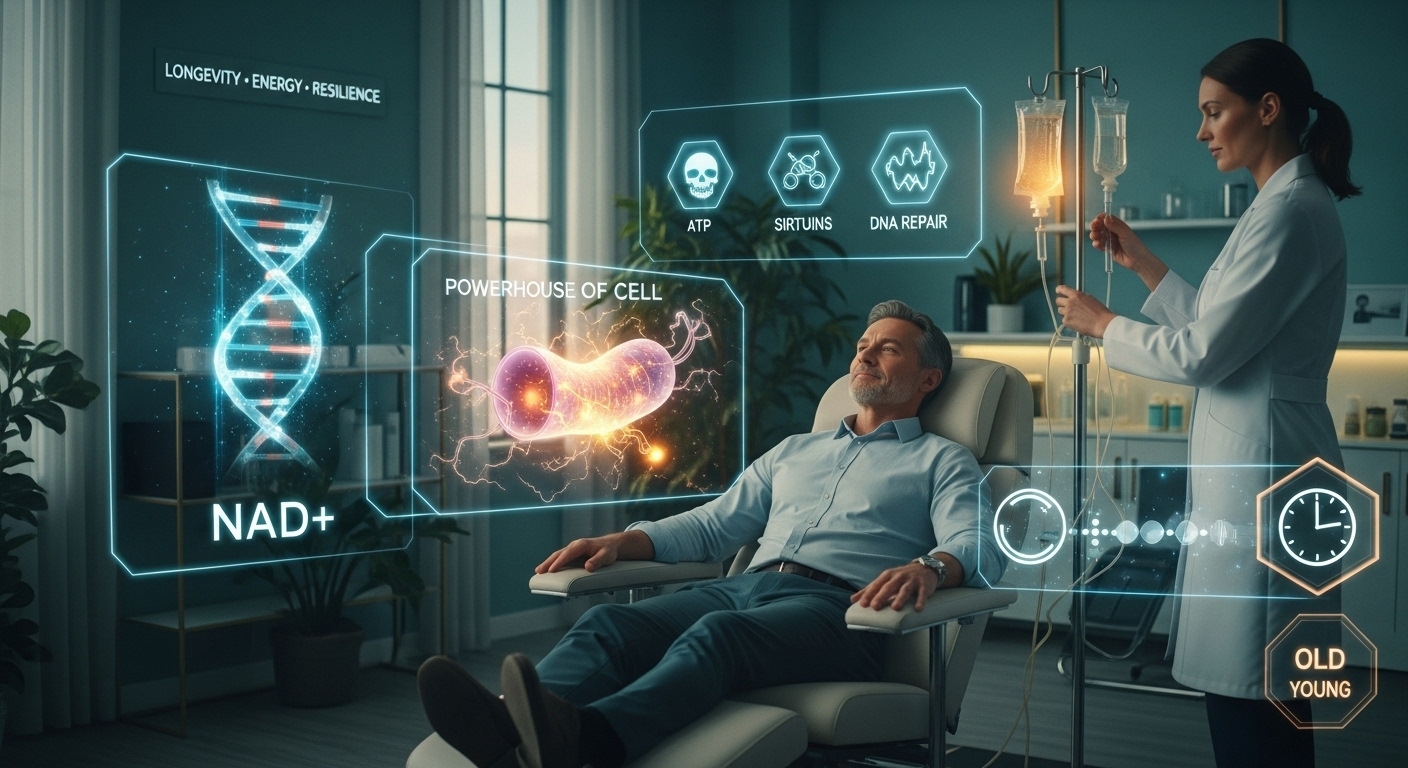
NAD+ IV therapy benefits get a lot of attention for a reason. People usually start looking into NAD+ IV therapy when they feel run down, mentally flat, slower to recover, or more focused on healthy aging than they were a few years ago. The hard part is separating biological logic from proven clinical outcomes. There is real science behind NAD+ itself, but the evidence for IV NAD+ as a wellness treatment is still early, and the strongest marketing claims move much faster than the data.
That does not mean the topic should be dismissed. It does mean readers deserve a calmer explanation than “fountain of youth” copy. NAD+ matters in human biology. IV delivery does change the route of administration. Some people do report noticeable effects during or after treatment. But “promising” and “settled” are not the same thing.
What Is NAD+?
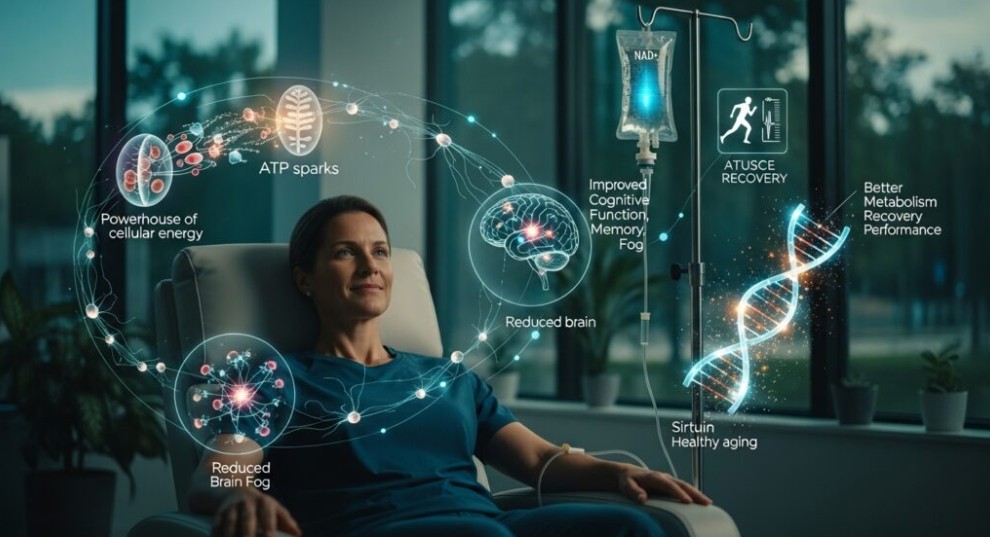
If you are wondering what NAD+ is, the short answer is that it is a coenzyme your body uses constantly. NAD+ stands for nicotinamide adenine dinucleotide. It is present in every cell and helps move electrons through the reactions that turn food into usable cellular energy.
That energy piece matters because mitochondria rely on NAD-related chemistry to do their job. When people talk about NAD+ for energy, this is usually the mechanism they are pointing to. NAD+ is also tied to enzymes involved in DNA repair, stress response, and cellular maintenance, which is one reason it comes up so often in conversations about NAD and aging. A broad review of NAD biology describes it as central to redox reactions, mitochondrial function, and enzymes linked to aging biology, while also noting that age-related NAD decline is a real research focus rather than a settled clinical shortcut to longer life.
Why NAD+ Levels May Change Over Time
The common claim is that NAD+ drops with age. That idea is not coming out of nowhere, but it needs context.
Researchers generally think NAD+ levels may shift over time because older cells face more accumulated stress. DNA damage repair consumes NAD+. Chronic low-grade inflammation can affect NAD metabolism. Oxidative stress, metabolic strain, and changes in enzyme activity may all pull from the same pool. The result is a plausible model where the body is using and recycling NAD+ under less favorable conditions than it did earlier in life.
What this does not prove is that every symptom of aging comes from low NAD+, or that restoring NAD+ automatically fixes fatigue, focus, or recovery in a predictable way. Biology is rarely that neat. Still, the age-related decline model is one reason this therapy keeps showing up in longevity and wellness settings.
Why People Are Interested in NAD+ IV Therapy
Most interest in NAD+ IV therapy falls into a few buckets.
One is low energy. Another is mental fog. Some people look into it because they train hard, work long hours, travel often, or feel like recovery takes more effort than it used to. Others are not chasing a symptom as much as a general healthy aging strategy.
That pattern of interest is worth naming clearly: it reflects what people want help with, not what has already been proven in large human trials. It is one thing to say NAD+ is involved in energy metabolism. It is another to say an NAD+ infusion will reliably change how a specific person feels week to week.
Potential NAD+ IV Therapy Benefits: What the Research Suggests
Cellular Energy and Mitochondrial Function
This is the most biologically grounded part of the conversation. NAD+ sits at the center of reactions that feed mitochondrial energy production. From a mechanism standpoint, it makes sense that low NAD availability could affect cellular efficiency.
Where the evidence gets thinner is at the step people care about most: does giving extra NAD+ by IV produce a clear, lasting change in day-to-day energy in humans? That has not been proven in large wellness trials. The mechanism is real. The clinical outcome is still being worked out.
Fatigue and Stamina
NAD+ IV therapy for fatigue is one of the most searched angles on this topic. That makes sense because “low battery” is how many people describe themselves before trying it.
The problem is that fatigue has many causes. Sleep debt, iron issues, thyroid disease, overtraining, low-calorie intake, hormone shifts, chronic stress, medication effects, and depression can all sit behind the same complaint. A person may feel better after a drip session, but that does not tell you why they were tired in the first place.
A more honest way to frame this is: NAD+ IV therapy may appeal to people with low energy, and some people report feeling more alert after treatment, but that is not the same as having strong clinical proof for fatigue across broad patient groups.
Cognitive Performance and Mental Clarity
NAD+ for brain fog gets talked about a lot, and there is some biological logic behind that interest. The brain is an energy-intensive tissue. NAD-dependent pathways are involved in cellular stress response and neuronal metabolism.
That said, “mental clarity” is a slippery endpoint. It is subjective, easy to oversell, and hard to isolate from placebo effects, sleep, hydration, and expectations. Human research on oral nicotinamide riboside has shown that it can raise NAD-related metabolites and appears to be well tolerated, but that still leaves a gap between biochemical change and a guaranteed real-world boost in focus or memory. One randomized trial in older adults with mild cognitive impairment is part of that wider evidence picture, and ongoing registered studies continue to test whether NAD-boosting strategies affect frailty, cognition, gait, and physical function over time.
Healthy Aging and Cellular Maintenance
This is where the hype gets loudest. NAD+ is tied to enzymes involved in DNA repair and cellular housekeeping, so marketers often jump from that to anti-aging claims.
There is a real difference between “involved in pathways linked to aging” and “reverses aging.” The first is fair. The second goes too far. Human wellness data do not support dramatic age-reversal claims for IV NAD+. If someone wants to use NAD+ as part of a broader healthy aging plan under medical supervision, that is a more grounded frame than expecting a visible rollback of biological age.
Metabolic Function
NAD+ is involved in carbohydrate, fat, and protein metabolism. That is another reason it comes up in weight and metabolic conversations.
Still, metabolic health is shaped by sleep, body composition, meal patterns, movement, insulin sensitivity, alcohol use, and medications. A single therapy usually does not override the basics. At most, NAD+ belongs in the category of adjunctive wellness support that may fit a larger plan, not a stand-alone answer.
Exercise Recovery and Physical Performance
IV therapy for recovery attracts people who train hard or simply feel slower to bounce back. There is a plausible link here because mitochondrial efficiency, oxidative stress, and cellular repair all matter in recovery.
But again, there is a difference between plausibility and proof. Strong human data showing that NAD+ IV therapy directly boosts athletic performance or shortens recovery time in a predictable way are not there yet. The cleaner claim is that some people use it in recovery-focused routines, especially under clinician supervision, while the evidence base remains limited.
NAD+ IV Therapy vs Oral NAD+ Precursors and Supplements
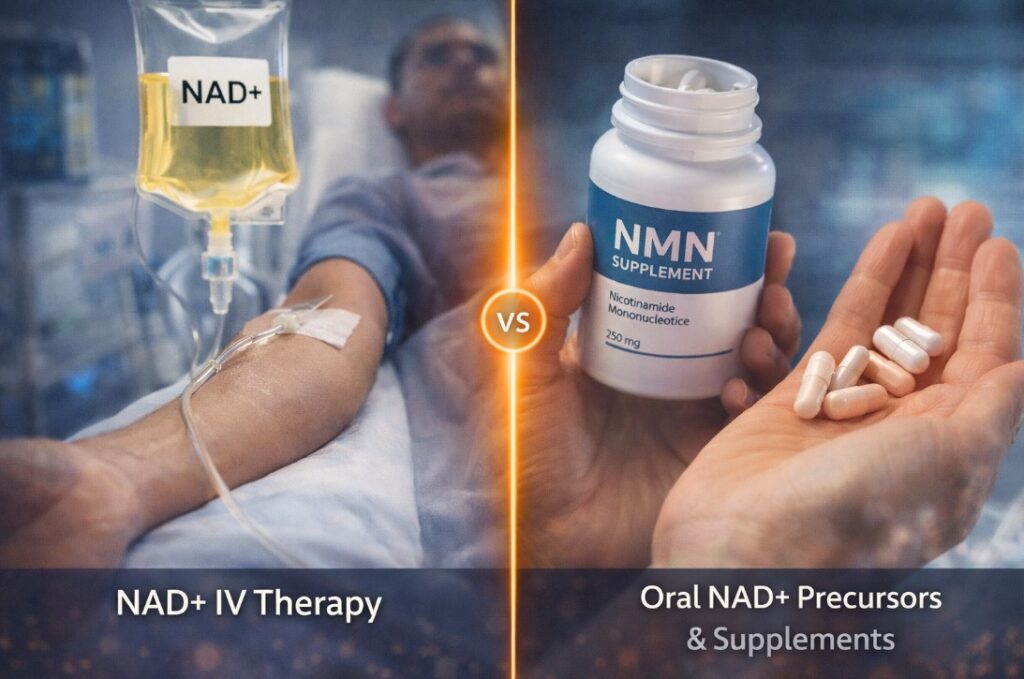
This section matters because IV NAD+ and oral supplements are often discussed as if they are interchangeable. They are not.
An NAD+ infusion bypasses digestion and delivers material directly through the bloodstream. Oral approaches usually rely on precursors like nicotinamide riboside or nicotinamide mononucleotide that the body then processes through its own pathways. That route difference is real.
What is less clear is whether IV delivery is better for every goal that matters to patients over the long run. Human oral precursor studies have shown that nicotinamide riboside can raise blood NAD-related metabolites and is generally well tolerated in older adults. What has not been proven is that IV NAD+ automatically produces better long-term wellness outcomes simply because it bypasses the gut.
There is also a practical point here. IV therapy is more time-intensive, more expensive, and more dependent on supervision than an oral precursor. In return, it offers direct administration and a treatment setting where the dose and infusion rate can be adjusted in real time.
Can You Support NAD+ Levels Naturally?
Yes, at least indirectly.
Regular exercise is one of the better-supported lifestyle links in this area. Sleep matters too. So does metabolic health. Heavy alcohol use works against many of the same systems people are trying to support. A nutrient-dense diet with adequate protein and B-vitamin intake also helps the body maintain the machinery involved in energy metabolism.
This is not as glamorous as an infusion menu, but it is still the base layer. If someone is sleeping five hours, drinking heavily on weekends, barely moving, and eating erratically, no NAD+ strategy is likely to do much on its own.
A More Grounded Look at the Evidence
This is the section most NAD+ articles skip or soften.
There are four levels people tend to blur together: mechanism, animal data, early human data, and strong clinical proof. NAD+ has a solid biological role. Animal and lab research are one reason the topic keeps moving forward. Human studies on oral precursors have shown changes in NAD metabolism and tolerability. Human data on IV NAD+ for general wellness goals are much thinner.
One small pilot study tracked plasma and urine changes during a 6-hour intravenous NAD infusion in humans and showed that IV administration does alter measurable NAD-related metabolites. It also reinforces something clinics already know in practice: infusion rate matters because tolerability can limit how quickly NAD+ can be given. That is useful information, but it is still a pilot study, not final proof that NAD+ IV therapy delivers broad anti-aging or performance outcomes.
So the fairest summary is this: the science behind NAD+ biology is real, the delivery route is biologically relevant, the wellness evidence for IV use is still early, and many public claims run ahead of what human trials currently support.
NAD+ Side Effects, Safety, and Practical Considerations
NAD+ side effects are usually described as temporary and dose- or rate-related. Common complaints during infusion may include nausea, warmth or flushing, chest or abdominal discomfort, headache, lightheadedness, or a general sense that the drip is moving too fast.
That rate sensitivity is one reason oversight matters. This is not the kind of therapy that should be treated like a casual add-on. Staff need to screen for medical history, current medications, hydration status, and the person’s reason for treatment. They also need to be able to slow the infusion if symptoms start to build.
None of that means NAD+ IV therapy is inherently unsafe. It means “medically supervised” should mean something real: screening before the session, observation during the drip, and a setting where rate changes can be made quickly.
Who Might Be Interested in NAD+ IV Therapy?
A few groups tend to be the best fit for the conversation.
People dealing with persistent low energy sometimes ask about NAD+ after ruling out more obvious medical causes. People with demanding schedules may look at it from a recovery angle. Others are interested in wellness planning and healthy aging treatments and want something more structured than guessing with supplements on their own.
There is also a subset of patients who simply prefer a clinician-guided approach. For them, part of the value is not the molecule alone. It is the setting, the screening, and the chance to place one therapy inside a broader plan.
Who Should Pause and Ask More Questions First?
This is just as important as candidacy.
People with complicated medical histories should get a clear medical review first. The same goes for anyone taking multiple medications, anyone pregnant or breastfeeding unless medically cleared, and anyone who is really trying to treat a diagnosed condition rather than support general wellness.
It is also smart to pause if your expectation is dramatic anti-aging reversal. That is where disappointment starts. NAD+ IV therapy may fit a broader plan. It should not be treated like a reset button.
What to Expect From an NAD+ IV Appointment
A well-run NAD+ IV appointment should start with screening. Why are you interested in it? What are your symptoms? What medications are you on? Are there better first steps to take before an infusion?
The infusion itself is usually slower than many standard IV drips because NAD+ can be uncomfortable if it runs too fast. Some people feel nothing unusual. Others notice warmth, nausea, chest tightness, or a wave of discomfort that improves when the rate is turned down. That does not always mean something is wrong. It often means the infusion needs to move more slowly.
This is one reason people often describe NAD+ differently from a basic hydration drip. It can be more time-intensive, and the session may need more active adjustment.
NAD+ IV Therapy at LIVV Natural
At LIVV, NAD+ sits inside a larger wellness and longevity conversation rather than a one-note anti-aging pitch. Readers comparing options may also want to look at LIVV’s main page for NAD+ IV therapy, the clinic’s medical team, and broader articles on longevity and anti-aging peptides.
Depending on goals, NAD+ may be discussed alongside other recovery- or performance-focused services, including hyperbaric chambers, ozone therapy, or simple nutrient support through the vitamin shot bar.
That broader framing matters. The best use of NAD+ IV therapy is usually not “this fixes everything.” It is “this may fit your goals after screening, with realistic expectations, and as part of a plan that still respects sleep, training load, nutrition, and medical basics.”
FAQ
What is NAD+ IV therapy and what is it supposed to do?
NAD+ IV therapy delivers nicotinamide adenine dinucleotide through an intravenous infusion rather than through oral supplements or precursors. It is usually discussed in relation to cellular energy, mitochondrial function, mental clarity, recovery, and healthy aging support, although the strength of the evidence varies depending on the outcome being claimed.
Does NAD+ IV therapy actually help with energy and fatigue?
It may appeal to people dealing with low energy, and some people report feeling more alert after treatment, but that is not the same as strong clinical proof across large patient groups. Your blog makes this distinction clearly by separating the real biological role of NAD+ from the much thinner human wellness data for IV NAD+ as a fatigue solution.
Can NAD+ IV therapy help with brain fog or mental clarity?
There is some biological logic behind that interest because NAD-dependent pathways are involved in cellular energy metabolism and stress response, including in the brain. But “mental clarity” is still a subjective endpoint, and your blog rightly notes that it is easy to oversell because sleep, hydration, expectations, and placebo effects can all influence how someone feels after treatment.
Is NAD+ IV therapy really anti-aging?
Not in the dramatic way it is often marketed. NAD+ is involved in pathways linked to DNA repair, cellular maintenance, and aging biology, but being involved in those pathways is not the same as proving that IV NAD+ reverses aging in humans. That more cautious framing matches both your blog and broader coverage, noting that bold anti-aging claims are ahead of the current evidence.
Is NAD+ IV therapy better than oral NAD+ supplements?
Not automatically. IV NAD+ and oral precursors are not interchangeable because IV delivery bypasses digestion, while oral strategies depend on the body’s processing of precursor compounds through its own pathways. Your blog explains that this route difference is real, but also points out that it has not been proven that IV NAD+ produces better long-term wellness outcomes for every goal that matters to patients.
What are the side effects of NAD+ IV therapy?
The most commonly discussed side effects are temporary and infusion-rate-related, including nausea, flushing, lightheadedness, headache, chest or abdominal discomfort, and a general feeling that the drip is running too fast. This matches broader reporting that people can feel dizzy, nauseous, anxious, sweaty, or uncomfortable during infusions, which is why supervision and rate adjustment matter.
How long does an NAD+ IV appointment usually take?
NAD+ sessions are often slower and more time-intensive than many standard IV drips because tolerability can depend heavily on infusion speed. Your blog explains that the session may need active adjustment if symptoms build, and external clinic guidance commonly describes NAD+ infusions as taking several hours rather than a quick in-and-out appointment.
Who is a good candidate for NAD+ IV therapy?
The best fit is usually someone looking at it as part of a broader wellness, recovery, or healthy-aging plan rather than as a guaranteed fix. Your blog positions it most reasonably for people with persistent low energy after more obvious causes have been reviewed, people with demanding schedules who are thinking about recovery, or people who prefer a clinician-guided wellness plan with realistic expectations.
Who should pause and ask more questions before booking NAD+ IV therapy?
People with more complicated medical histories, people taking multiple medications, anyone pregnant or breastfeeding unless medically cleared, and anyone trying to treat a diagnosed condition rather than support general wellness should get a proper medical review first. Your blog also makes the important point that people expecting dramatic anti-aging reversal are especially likely to need a more grounded conversation before booking.
What should you expect from an NAD+ IV therapy session?
A well-run appointment should start with screening, followed by a slower infusion that can be adjusted if nausea, warmth, chest tightness, or discomfort begin to build. That is one reason your blog emphasizes that medically supervised should mean something real, with screening before the session, observation during the drip, and the ability to slow the rate when needed.
Should You Book NAD+ IV Therapy?
If you are interested in NAD+ IV therapy benefits, the best next step is not chasing the strongest claim online. It is getting clear on your goal.
Are you trying to address low energy? Recovery after a heavy stretch? General wellness support? A healthy aging plan that is medically supervised and not built on hype? Those are reasonable starting points. Expecting a dramatic reversal of aging or a guaranteed fix for fatigue is not.
Used thoughtfully, NAD+ IV therapy may make sense for some people. It just works better when the decision is based on screening, context, and honest evidence rather than marketing language.