

Blog
Melanotan II Safety: Tanning Injection — Is It Worth the Risks?

A tan can feel like a shortcut to looking rested, sharper, and “vacation ready,” even if your sleep, diet, and stress were a mess all week. That is why tanning shots keep popping up right before trips, weddings, and summer.
Melanotan II is sold as a “sunless tan” hack, but the risk list is longer than most people expect, and the long-term story still has big blanks.
If you are thinking about a tan jab, this article lays out what Melanotan II is, what can go wrong, and what safer options look like day to day. You will also see when a skin exam should come first.
Why Melanotan II keeps showing up online
A lot of people want color without a burn. Many also want to skip tanning beds and still look bronzed in photos.
Short videos make it look simple. A quick clip does not show the nausea, the panic, or the new dark spots that show up later.
There is also a confidence loop. Once someone sees color showing up, they often push for more.
What Melanotan II is in plain terms
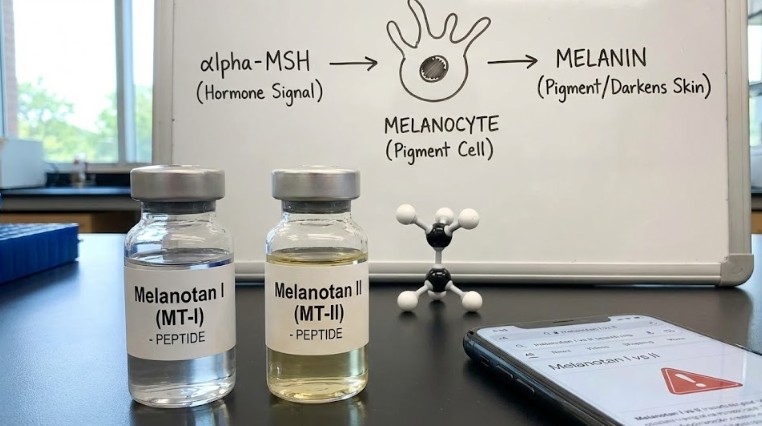
Melanotan II (often called MT-II) is a lab-made peptide related to alpha-MSH, a hormone signal your body uses in pigment pathways. That signal talks to melanocytes, the cells that make melanin.
Melanin is the pigment that darkens skin, freckles, and moles. It also shifts how light reflects off your skin, which is why a tan can “hide” texture in photos.
Melanotan I vs Melanotan II
People use the word “melanotan” as if it were one thing. Online, you will usually see Melanotan I and Melanotan II.
They are not the same peptide. They also do not act the same way in the body.
This matters because many products are sold through gray-market channels. A label can say one name, while the vial may not match that label.
How a tanning peptide creates color
Your skin color is shaped by melanin. Melanin is made inside melanocytes and then passed to nearby skin cells.
UV light can trigger this system. So can chemical signals that act on melanocortin receptors in the skin.
Melanotan II acts in that signaling lane. It pushes pigment activity even without sun exposure.
Why can the color look uneven?
Melanin does not rise in a uniform sheet. Some zones have more pigment cells, more sun history, or more inflammation.
That is why freckles, scars, lips, and older sun spots may darken first. It is also why two people can have very different “Melanotan results,” even if they used the same product name online.
A tan is pigment, not armor
A darker look does not mean your skin is safe in the sun. A tan is a sign that your skin reacted to stress, and that stress still counts.
Melanotan II can also trick people into thinking they need less sunscreen. That false sense of safety can drive longer sun time and more UV damage.
The pull: why people still try it
The marketing hits three buttons fast. It promises color, it promises speed, and it promises “no sun.”
It also plays into a real fear: burning. People with fair skin often feel stuck between pale skin they dislike and sunburns they hate.
That is a real frustration. It still does not mean the answer is an unapproved injectable sold on the internet.
Melanotan II safety: the risks most posts skip
This is the part most sellers rush past. It is also the part that should guide your decision.
There are risks from the drug effect itself. There are also risks from how it is sold, stored, and used.
When a substance is sold online with no regulated testing, no stable dose control, and no real label rules, you are betting your skin on a mystery vial and a hope.
Risk 1: It is not an approved cosmetic tanning drug
Melanotan II is not an FDA-approved cosmetic tanning drug in the United States. That means there is no standard label, no standard tracking, and no clean path for quality checks.
Many listings try to dodge this by calling it “research only.” At the same time, the marketing is built for people who want to look tan.
That mismatch is where harm starts. It also makes it hard to know what is actually in the vial or spray.
Risk 2: The supply chain is shaky
Even if the peptide itself had a clean record, the gray-market supply chain adds new risks. Mislabeling, impurities, and wrong strength are realistic problems.
Some products are also sold as nasal sprays, drops, or “gummies.” The form may look less scary than a needle, but the same labeling problem remains.
Risk 3: Side effects can hit fast
Many people report nausea soon after use. Flushing and a warm face are also common.
Some people feel dizzy or anxious. Some feel a weird feeling, then a crash.
Appetite shifts are also common. A tan is not a good reason to mess with hunger signals.
Risk 4: Sexual side effects are not rare
Melanotan II can act on receptors tied to libido and arousal. Some users report a spike in sexual drive that feels sudden.
In men, that can include spontaneous erections that show up at the wrong time. In rare cases, an erection can last too long and become an emergency.
This is also why Melanotan II shows up in sexual forums. A related offshoot peptide is PT-141, which is discussed in a very different context.
Risk 5: Moles can darken, and new spots can pop up
Many users report darker moles or new freckles. That is not a harmless cosmetic perk.
Fast pigment shifts can hide early skin cancer signs. They can also delay a skin check because a person assumes the peptide is the reason.
If you already have many moles, a family history of melanoma, or a past atypical mole, this risk jumps.
Risk 6: Skin cancer worries are not hype
No one can say Melanotan II “causes melanoma” in a clean one-liner. The data is not that neat.
What we do have are case reports of atypical moles showing up soon after use, plus warnings from cancer groups and regulators against tanning injections and sprays.
Even if the peptide is not the root cause, it can still raise risk by masking mole warning signs and pushing people into more sun time.
If your skin has taken a hit from sun season, these reads can help you reset habits: sun damage and wrinkles.
Risk 7: Injection problems are not “small stuff”
Any injection has a risk. A non-sterile injection can cause a skin infection, an abscess, or a painful lump.
A shared needle can spread blood-borne viruses. A dirty vial can carry bacteria.
Even a “clean” injection can cause swelling or a bad local reaction. This is one more reason a tanning peptide should not be treated like a casual beauty product.
Risk 8: A “tan jab” can push risky sun behavior
Some users pair Melanotan II with sunbeds or midday sun to “lock in” color. That stacks UV damage on top of a drug that already alters pigment behavior.
That combo also raises another issue: you might think you are protected because you look darker. UV damage still happens, even when you do not burn.
Risk 9: Rare reactions can be serious
Some reactions go beyond nausea and flushing. Reports include very fast heart rate, high blood pressure, severe anxiety, and muscle pain that feels out of proportion to what you did that day.
A few case reports also describe muscle breakdown with kidney strain and serious kidney events. Even if these outcomes are not common, they are not “beauty side effects.”
Red flags after a tanning shot
Get urgent care if you notice any of these soon after use:
- Severe body aches or muscle pain
- Dark urine, weakness, or sudden swelling
- Severe headache, confusion, or trouble seeing
- Fainting, chest pain, or a racing heart
- A fast-spreading rash or throat tightness
If you injected a product bought online, tell the clinician exactly what you used. Bring the packaging if you still have it.
Risk 10: Mood and panic can spike
Melanotan II acts in the brain as well as the skin. That is why some users report sudden anxiety, panic, or a restless “can’t sit still” feeling.
If you already deal with panic attacks, this is a big red flag. A cosmetic tan is not worth a mental spiral.
A few myths that keep people stuck
Myths spread fast because they sound logical. Here are the ones we hear most.
Myth: “It’s safer than tanning beds because it has no UV”
UV damage is real, and tanning beds are a bad idea. That does not make an unapproved drug safe.
You are swapping one risk for another. In this case, you add drug side effects plus injection risks.
Myth: “It’s fine if I start low and go slow”
Dose is only one part of the risk. The bigger issue is that the product may not be what the label says.
Even a “low” dose can be a problem if the vial is mislabeled or contaminated.
Myth: “A tan means I’m less likely to burn, so I can use less SPF”
A tan is not a sunscreen. Melanin does not block enough UV to make sun time “safe.”
Using less SPF is one of the fastest ways to stack damage, even if you do not see a burn.
Myth: “It’s just a peptide, so it must be gentle”
Peptides can act like strong signals. Some are used in medicine, and some are not meant for casual use.
Treating a peptide like a beauty supplement is how people miss real risks.
Who should stay away from tanning injections?
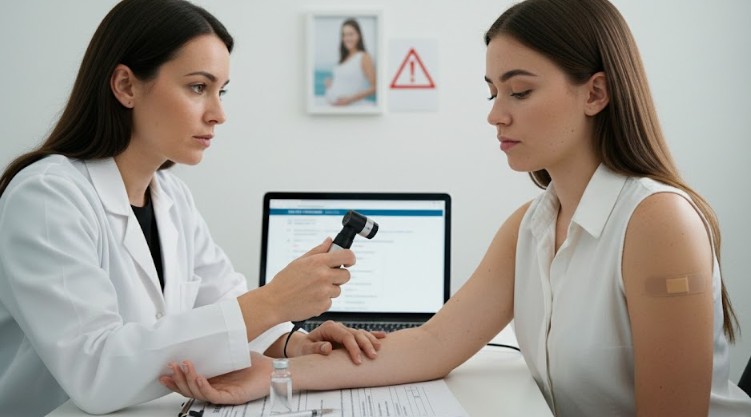
This is not a complete medical list. It is a common-sense screen that cuts risk.
Avoid tanning peptides if any of these fit you:
- A personal or family history of melanoma
- A past atypical mole or “dysplastic nevus”
- Many moles, especially if you have never had a full skin exam
- Pregnancy or breastfeeding
- A history of severe anxiety, panic attacks, or fainting
- A past severe allergic reaction to injectables
If any of these fit, a tan is not worth the gamble.
A better question than “Does it work?”
A lot of people ask, “Do tanning injections work?” That is the wrong first question.
The better question is, “What is the cost if this goes wrong?” A spray tan that looks bad washes off, but a bad skin event does not.
If you already used Melanotan II
This is not a shame topic. A lot of smart people try things after seeing a hundred glowing reviews.
The next move is simple: stop the product and get your skin checked if you see fast mole shifts, new dark spots, or weird symptoms.
A quick self-check for mole shifts
Look for these signs and act fast if you see them:
- One spot that looks different from the rest
- A border that looks jagged instead of smooth
- Two or more colors in the same spot
- A spot that grows fast
- A spot that itches, bleeds, or crusts
If any of these show up, book a dermatology visit. Do not wait for “next month.”
Watch for urgent symptoms
Go to urgent care if you get chest pain, fainting, severe swelling, trouble breathing, or a severe rash.
If you get an erection that lasts longer than a few hours, treat it as urgent. Waiting can raise the risk of long-term harm.
If you used a nasal spray
Do not assume “nose” means safer. You still have the unregulated product issue, plus irritation to the nasal lining.
If you feel wheezing, chest tightness, or a strong allergic reaction, get checked.
Safer tanning methods that do not involve injections
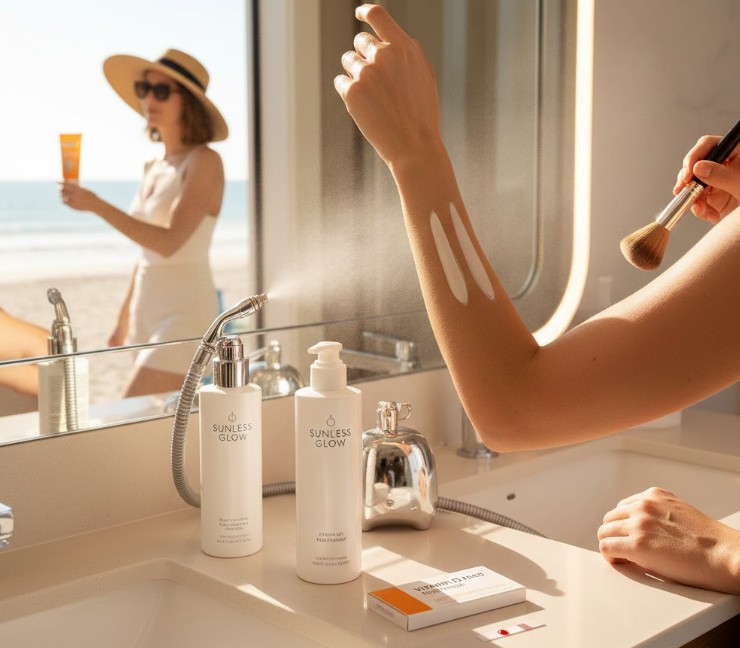
If what you want is color, you have safer paths. None of them asks you to inject an unapproved drug.
Option 1: Sunless lotions and spray tans
Most self-tanners use DHA, which colors the top layer of skin without UV exposure. The result fades as your skin sheds.
A spray tan can look even and fast. A gradual lotion can look softer and less streaky.
Option 2: Makeup that rinses off
Body bronzer and tinted body makeup can look great for a weekend trip. It also washes off, which is a nice feature when you change your mind.
This option also avoids the “mole masking” problem. You are not altering pigment cells inside the skin.
Option 3: Short sun time with SPF, not a burn
If you like a real sun-kissed look, you can still be smart. Use sunscreen, avoid midday burn hours, and build color slowly.
Any tan still means UV exposure. Keep the goal small, not extreme.
Option 4: Stop tanning for vitamin D and test instead
A lot of people chase the sun for vitamin D. That makes sense, but you do not need a very dark tan to handle vitamin D status.
A lab test can show if you are low. A simple plan can then bring levels up without pushing UV damage.
“Safe tanning methods” people ask about (and what is real)
There is no truly safe UV tan. There are safer ways to look tan.
Here is a quick comparison:
| Method | What changes | Main risks | Who it fits best |
|---|---|---|---|
| Melanotan II injections | Pigment signaling inside the body | Unapproved drug, side effects, mole masking, injection infections | Few people talk with a clinician first |
| Tanning beds | UV exposure | Burns, DNA damage, and higher melanoma risk | Best skipped |
| Sunbathing without SPF | UV exposure | Burns, early aging, and skin cancer risk | Best skipped |
| Sun with SPF + shade | UV exposure is lower | Still adds UV load | People who want a mild glow and stay cautious |
| Self-tanner (DHA) | Surface color only | Streaks, irritation in sensitive skin | Most people who want color-fast |
| Body bronzer | Surface color only | Smudging on clothes | Events, photos, short trips |
Sun habits that keep your skin calmer
You do not need to hide indoors to be safe. You just need rules that lower UV load while still letting you enjoy your day.
Try these basics:
- Use a broad-spectrum SPF 30+ on face, neck, ears, and hands
- Reapply every two hours, and again after swimming or heavy sweating
- Wear a hat with a real brim, not a tiny fashion edge
- Use sunglasses to cut eye strain and squint lines
- Pick a shade between late morning and mid-afternoon
- Skip tanning beds, since they stack UV fast
- Watch meds that raise sun sensitivity, like some acne and antibiotic drugs
If you do get a burn, treat it like an injury. Cool the skin, hydrate, and stay out of the sun until it settles.
Self-tanner tips that cut streaks
A self-tanner is still the safest way to look tan for most people. The bad rap comes from a rushed application and dry skin.
A few simple tweaks can make the color look more even:
- Exfoliate gently the day before, not right before
- Moisturize elbows, knees, ankles, and hands first
- Use a mitt and light layers instead of one thick coat
- Wash palms right after, then blend the backs of hands
- Let it dry before getting dressed
- Use SPF anyway, since a fake tan does not block UV
If you are acne-prone, patch test first. Some self-tanners are fine, and some clog pores in sweaty areas.
“Glow” without extra pigment
Many people chase a tan because they want skin that looks even and smooth. Pigment is one path, but it is not the only one.
If your real goal is fewer dark spots, less redness, or a smoother tone, you may get more from skin services that target those concerns without forcing melanin.
A myth that keeps the cycle going: “A base tan is safe”
A base tan does not block UV damage. It can also push people into longer sun time because they feel they “earned” protection.
Skin aging shows up as rough texture, uneven tone, and fine lines over time. That is why tanning and anti-aging goals often fight each other.
If your goal is smoother skin, focus on UV habits first, then add skin-care steps that do not harm the barrier.
If you still want to talk about peptides, keep it simple
People who look up Melanotan II often look up other peptides in the same sitting. They see stacks, cycles, and “protocols” in the same thread.
That is a fast way to feel worse, because you cannot tell what caused what. It is also a fast way to miss a red flag, since you blame symptoms on “normal side effects.”
If you want a clinic-led talk about peptide options in general, see peptide therapy.
FAQs about Melanotan II safety
Is Melanotan II legal in the US?
Many sellers ship it anyway, but that does not make it approved or safe. “Research only” labeling is common, yet the marketing often targets tanning.
If you are unsure, treat that as a red flag and talk with a clinician instead of trusting a shopping cart.
Is Melanotan II the same as a spray tan?
No. A spray tan colors the surface layer and fades with skin shedding.
Melanotan II shifts pigment activity inside the body, which is why the risk list is longer.
Does Melanotan II protect from sunburn?
No. A darker look does not replace sunscreen, and it does not erase UV damage.
It can also make some people spend more time in the sun because they feel safer.
Is the nasal spray safer than injections?
Nasal sprays still carry the unregulated product problem. You still do not know what is in the bottle.
You also add a new risk: dosing is less controlled, and the nasal lining can react.
Is there a safe dose?
No dose makes an unapproved tanning drug “safe.” Dose talk online also ignores the bigger issue: you may not be using what you think you bought.
If you see a dosing chart, do not treat it as medical care.
Why do people feel nauseous on Melanotan II?
The peptide can act on receptors beyond the skin. That system can affect the gut, blood vessels, and the brain.
That is why nausea and flushing are common early complaints.
Can Melanotan II affect moles?
Yes, many users report darker moles or new freckles. Any fast pigment shift needs a closer look.
If you see a fast shift, do not wait, since early skin cancer signs can look small.
What about “Melanotan results” photos online?
Photos can be real, but they also hide a lot. You do not see the side effects, the new spots, or the skin checks.
You also do not know what else the person did, like tanning beds, filters, or body makeup.
Can Melanotan II change appetite?
Yes, appetite shifts are common in reports. Some people eat less and feel fine, while others feel sick and weak.
A tan is not a safe reason to mess with appetite signals.
A tan should never be a medical risk
A bronzed look fades, but skin damage can last for years. A “tan jab” can also create a stress load you did not plan for, from nausea to pigment shifts that need follow-up.
If you want help sorting safer options for color, skin tone, or peptide use under medical oversight, you can book a visit through booking.