

Blog
At-Home vs In-Clinic Testing: How to Choose the Right Diagnostic Approach for Your Health Goals
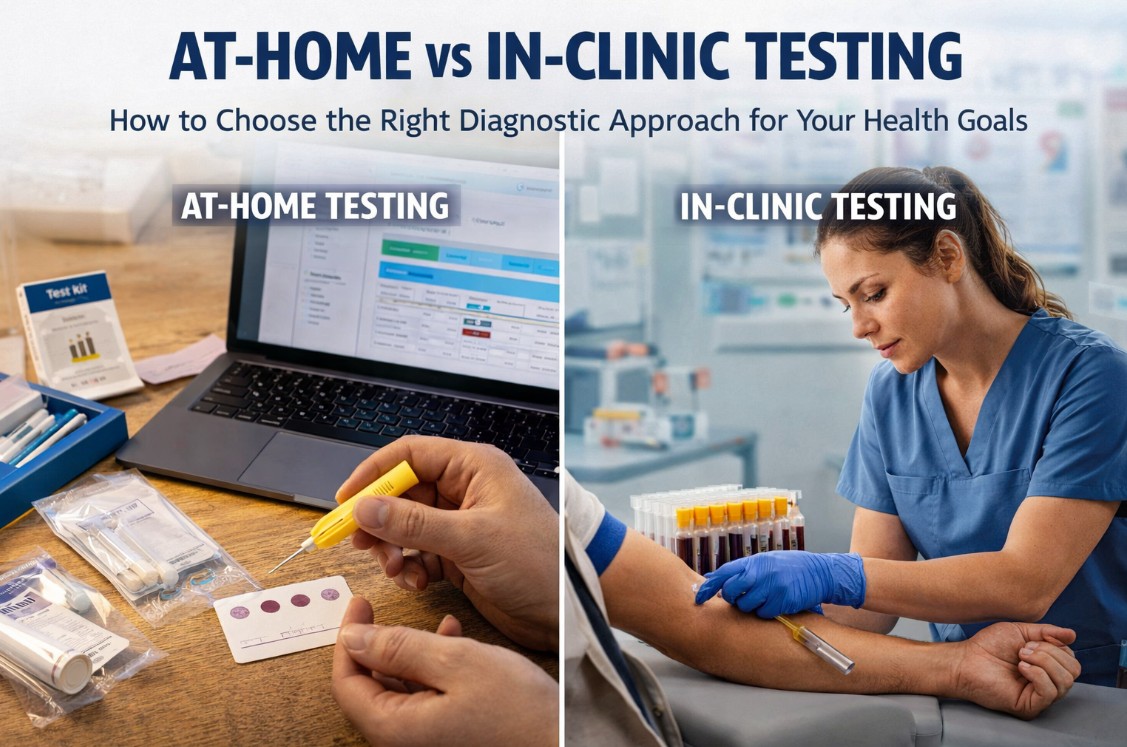
Getting the right diagnostic testing can make or break your health plan. Whether you’re tracking hormone levels, checking inflammation markers, or running a full metabolic panel, the testing method you choose affects everything—from result accuracy to what happens next.
Today’s options include mail-in kits you complete at home and traditional blood draws at a clinic or laboratory. Both have their place. At-home testing appeals to people who want quick answers without scheduling appointments. In-clinic testing offers broader panels, professional sample collection, and physician-guided interpretation. The question isn’t which is “better”—it’s which fits your situation.
This guide breaks down at-home vs in-clinic testing side by side. We’ll cover what each involves, their respective strengths and weaknesses, and specific scenarios where one outperforms the other. Whether you’re checking testosterone, thyroid function, vitamin levels, or inflammatory markers, you’ll know which route makes sense.
What Are At-Home Medical Tests?
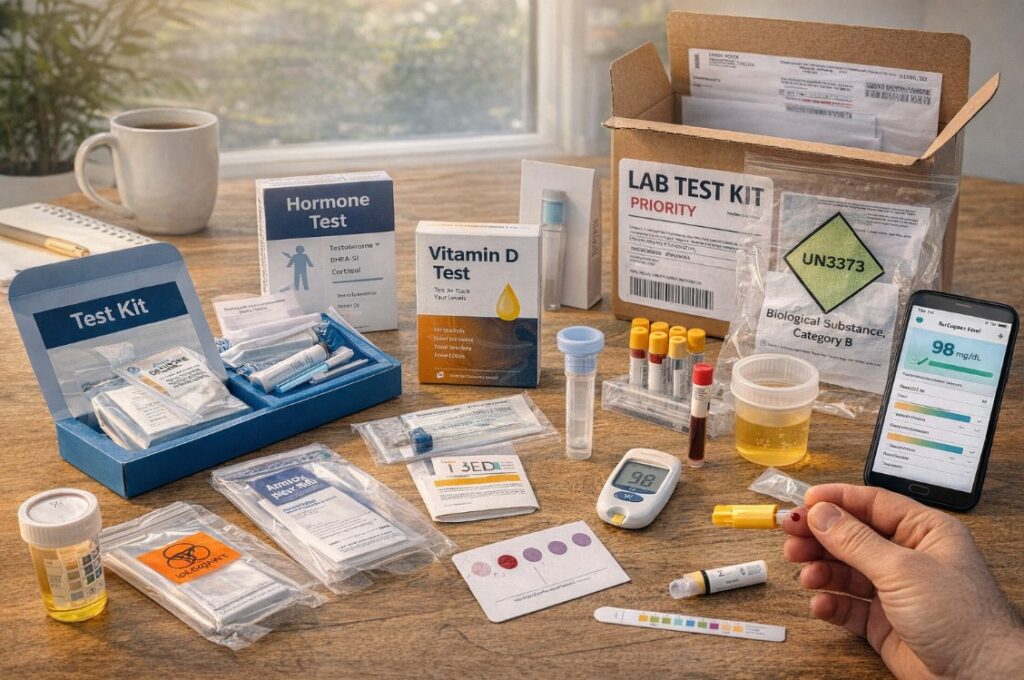
At-home testing kits let you collect biological samples—blood, saliva, or urine—without visiting a medical facility. You purchase a kit online or at a pharmacy, follow the collection instructions, and either read results immediately (like a glucose strip) or mail your sample to a partner laboratory.
Common at-home test categories include:
- Hormone panels (testosterone, cortisol, thyroid hormones)
- Vitamin and mineral levels (vitamin D, B12, iron)
- Metabolic markers (blood sugar, cholesterol, HbA1c)
- Food sensitivity and allergy screening
- Fertility indicators (AMH, FSH, LH)
- Inflammatory markers (CRP)
Most blood-based kits use finger-prick collection, where you lance your fingertip and apply drops to a collection card or microtube. Saliva kits require you to spit into a tube at specified times (often morning and evening for cortisol testing). Urine tests work similarly to traditional dipstick screening.
The appeal is obvious: no appointments, no waiting rooms, and results delivered to an online portal within days. For someone monitoring a known condition or curious about a single marker, this streamlined approach makes initial screening accessible.
That said, at-home kits work best as screening tools rather than diagnostic endpoints. A concerning result should prompt follow-up with a healthcare provider who can confirm findings, investigate causes, and recommend next steps. The kit gives you a data point; a clinician helps you understand what it means for your body.
What Is In-Clinic Testing?
In-clinic testing refers to laboratory work conducted under medical supervision—typically at a doctor’s office, naturopathic clinic, or accredited laboratory facility. A trained phlebotomist draws blood from a vein (usually in your arm), and samples are processed in a clinical laboratory with standardized quality controls.
The process involves several steps. First, a physician determines which tests are appropriate based on your symptoms, history, and health goals. Then a professional collects your sample using proper technique. The laboratory analyzes your specimen using calibrated equipment with documented accuracy standards. Finally, your provider interprets results within the context of your complete health picture and recommends treatment or lifestyle modifications.
In-clinic panels often test dozens of markers simultaneously. A comprehensive blood panel might include complete blood count, metabolic markers, lipid profiles, thyroid hormones, inflammatory indicators, and sex hormone levels—all from a single blood draw. This breadth matters because health conditions rarely affect just one marker. Fatigue, for instance, could stem from low iron, thyroid dysfunction, hormone imbalance, or blood sugar issues. Testing broadly helps identify root causes rather than surface symptoms.
The trade-off involves logistics. You’ll need to schedule an appointment, possibly fast beforehand, and travel to the facility. Costs may be higher, though insurance often covers physician-ordered labs. Despite these inconveniences, in-clinic testing remains the standard for diagnosis and treatment planning because accuracy and interpretation matter most when making health decisions.
Side-by-Side Comparison: At-Home vs In-Clinic Testing
| Factor | At-Home Testing | In-Clinic Testing |
|---|---|---|
| Convenience | Very high—test on your schedule, no appointments required. Ideal for busy people or those in remote areas. | Moderate—requires scheduling and travel, but one visit can cover many tests simultaneously. |
| Cost | Variable ($40–$200+ per kit). Insurance rarely covers OTC kits. May need multiple kits or follow-up testing. | Can range widely. Insurance often covers physician-ordered tests. Higher per-visit cost but more data per dollar. |
| Accuracy | Generally acceptable for screening when used correctly. Finger-prick samples may show variance from venous draws. User error affects reliability. | Highly trained professionals collect samples, and advanced instruments analyze them with strict quality controls. Venous blood provides larger sample volumes for precise measurement. |
| Scope of Tests | Limited to available kit options. Most cover single markers or small panels. Specialized hormone or micronutrient panels are often unavailable. | Full spectrum—doctors can order any combination of tests. A single draw can measure dozens of biomarkers across multiple body systems. |
| Physician Support | Minimal. Some companies offer generic reports or optional telehealth consultations. No personalized interpretation is included with most kits. | Built-in. Providers select appropriate tests, explain the results in relation to your specific situation, and create treatment plans based on the findings. |
Pros and Cons of At-Home Testing
Advantages
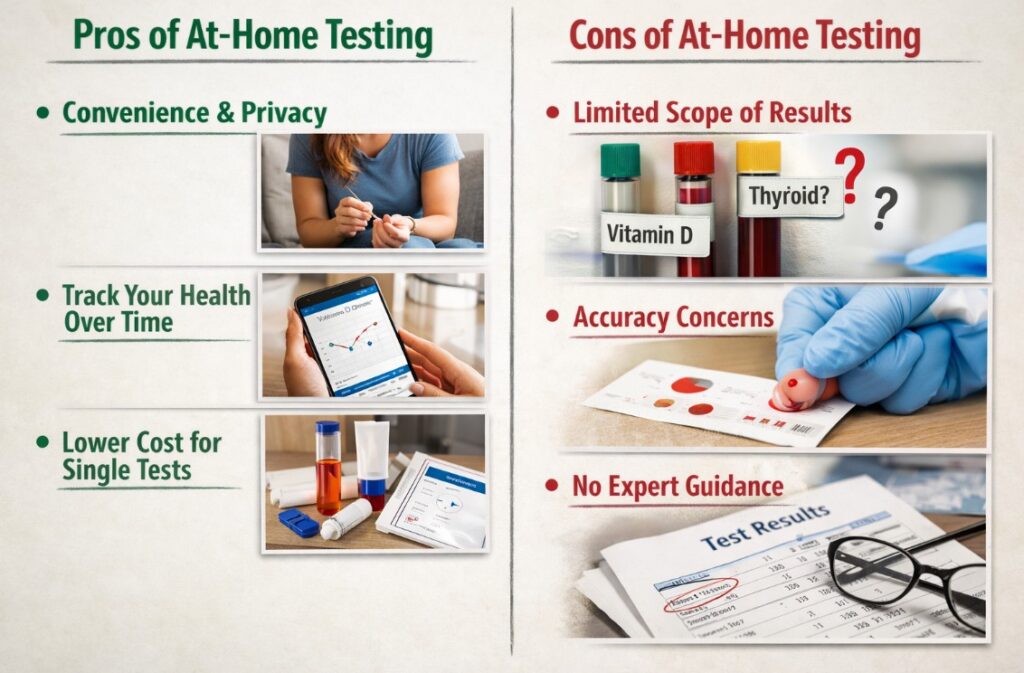
Convenience without compromises on your schedule. You collect samples when it works for you—first thing in the morning, after work, on weekends. No sitting in waiting rooms or rearranging your day around lab hours.
Privacy for sensitive screenings. Certain tests (STI screening, fertility indicators, hormone levels) feel awkward to discuss or pursue through traditional channels. At-home kits remove that barrier for initial checks.
Tracking trends over time. If you’re monitoring a known condition or experimenting with lifestyle interventions, periodic home testing shows whether your efforts are working. Seeing your vitamin D rise after supplementation, or watching inflammatory markers drop as you adjust your diet, provides tangible feedback.
Lower upfront cost for single markers. Checking one value—like testosterone or vitamin D—costs less through a kit than through an office visit plus lab fees, assuming you don’t have insurance coverage.
Limitations
A narrower scope means incomplete pictures. Most kits test one or two markers. The human body doesn’t work that way. Your fatigue may be related to issues with your thyroid, iron, B12, cortisol, and blood sugar levels simultaneously. A single-marker kit catches one variable and misses the rest.
Sample collection affects accuracy. Finger-prick blood samples differ from venous draws. Research comparing capillary and venous samples has found that while lymphocyte-related measurements often correlate well between methods, other cell populations can show double-digit percentage differences. Squeezing the finger, improper timing, or environmental exposure during mailing can introduce additional variability.
No personalized interpretation. You receive numbers and generic reference ranges. But what does it mean if your testosterone is “in range” but at the bottom? What if your cortisol pattern shows morning values that are technically normal but problematic for your symptoms? Without a clinical context, results become trivia rather than guidance.
Even trained doctors reported uncertainty in interpreting test results in 8.3% of diagnostic encounters. If physicians find laboratory data tricky to parse, consumers working from automated kit reports face steeper challenges.
Potential for cascading costs. An at-home test showing abnormal values requires in-clinic confirmation. Now you’ve paid for both. An at-home test showing “normal” values might miss a problem that broader testing would catch—delaying care you actually needed. Either scenario adds expense beyond the initial kit.
Pros and Cons of In-Clinic Testing
Advantages
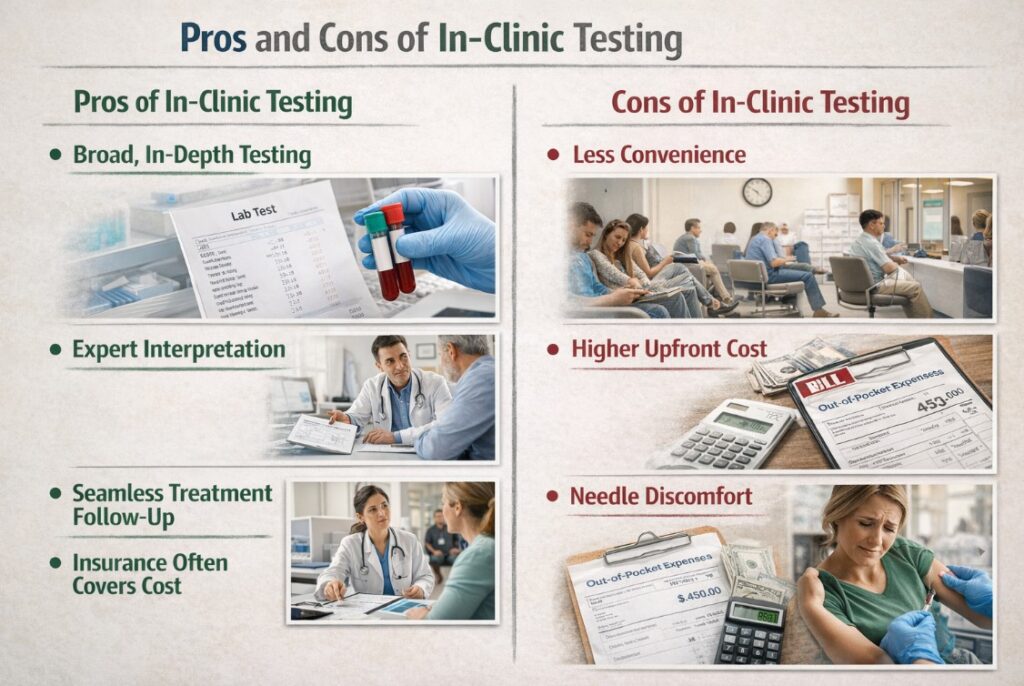
Breadth reveals connections. Clinical panels test multiple systems simultaneously. When your doctor orders foundational biomarkers, they’re not just checking boxes—they’re looking for patterns. An at-home testosterone kit might show normal T levels while missing that your thyroid is underperforming, your iron stores are depleted, and your inflammatory markers are elevated. Those three factors explain your fatigue better than testosterone does.
Sample quality and handling standards. Venous blood draws provide larger sample volumes, reducing measurement variability. Clinical laboratories maintain calibrated equipment, participate in proficiency testing programs, and follow documented protocols. The difference matters most for tests requiring precision—hormone fractions, antibody levels, certain vitamin metabolites.
Interpretation is built into the process. Results come with a conversation. Your provider knows your symptoms, your history, your medications, and your goals. They explain what each value means in your context and what to do about findings outside optimal ranges. This turns data into decisions.
Research on laboratory medicine quality emphasizes that the value of testing lies not just in accurate numbers but in how those numbers affect clinical decisions and patient outcomes. Without expert interpretation connecting test results to treatment actions, even perfect data provides limited benefit.
Seamless treatment follow-through. The same clinic that draws your blood can prescribe interventions based on findings. If your cortisol testing reveals adrenal dysfunction, your provider implements a protocol. If your inflammatory markers are high, they investigate causes and address them. Testing and treatment exist in the same relationship rather than separate silos.
Insurance may cover costs. Many plans reimburse lab work ordered by physicians. A large panel that would cost hundreds out-of-pocket through multiple home kits might cost you only a copay when processed through your provider and insurance.
Limitations
Less convenient scheduling. You need an appointment during business hours. You may need to fast overnight. You drive to the facility, wait, and drive back. For people with demanding jobs or complicated logistics, this eats time.
Potential for higher upfront expense. Without insurance or with a high-deductible plan, comprehensive lab panels carry real price tags. Costs vary dramatically between facilities, too—hospital labs often charge more than independent laboratories or direct-pay clinics.
Needle discomfort. Some people genuinely dislike blood draws. The finger-prick of home testing, while less precise, feels less invasive than venipuncture for those with needle anxiety.
When to Choose At-Home Testing
At-home kits make sense in specific scenarios where convenience outweighs the need for clinical precision.
Monitoring a stable, known condition. If you’re already working with a doctor and want to track a single marker between visits—like blood glucose for diabetes management or HbA1c for metabolic monitoring—home testing can supplement your care plan without requiring extra appointments.
Initial curiosity about a single value. Wondering whether your vitamin D levels tanked over winter? A $40 home kit satisfies that curiosity faster than scheduling an office visit. If levels look low, you take the result to your doctor for confirmation and treatment planning.
Screening before committing to full workups. Some people want preliminary data before investing in comprehensive testing. An at-home hormone snapshot might confirm that further investigation is warranted—or reveal that concerns were unfounded.
Geographic or scheduling barriers. If the nearest quality lab is hours away, or if work schedules make appointments nearly impossible, home testing provides access that wouldn’t otherwise exist.
In all these cases, remember that at-home results are starting points. Abnormal findings need professional follow-up. Normal findings don’t guarantee health, since home kits may not test the right markers.
When to Choose In-Clinic Testing
Clinical testing becomes the clear choice when accuracy, completeness, or treatment planning matters.
Hormone assessment requires precision. Hormone testing benefits enormously from professional collection and interpretation. Testosterone evaluation for men or hormone balance assessment for women involves multiple markers beyond single-hormone kits—free testosterone, SHBG, estradiol, DHEA, thyroid hormones, and sometimes adrenal markers. These interact in ways that single-test kits can’t capture.
Studies validating dried blood spot assays for testosterone measurement note that while newer collection methods show promise, standardization challenges remain, and hematocrit correction often requires separate venous samples anyway. For reliable hormone data that guides treatment, clinical testing remains the standard.
Symptoms requiring investigation. Persistent fatigue, unexplained weight changes, mood disturbances, or other ongoing symptoms warrant a thorough workup. A doctor will order appropriate panels, interpret findings in context, and pursue additional testing if initial results are inconclusive.
Baseline establishment. If you’re starting a health optimization program—or just want to know where you stand—a comprehensive lab panel provides your reference point. Tracking changes over time requires accurate baselines. Future you will appreciate knowing exactly where you started.
Treatment monitoring. Whether you’re on hormone optimization therapy, peptide protocols, or other interventions, clinical testing verifies that treatments are working as intended and guides dosing adjustments.
Inflammatory or metabolic concerns. Chronic inflammation underlies cardiovascular disease, autoimmune conditions, and metabolic dysfunction. In-clinic panels can test CRP, ESR, fasting insulin, lipid particle size, and other markers that most home kits don’t cover. If you have a family history of heart disease or diabetes, or if you’re proactively managing metabolic health, this depth matters.
Specific Testing Categories: Where Each Approach Fits
Hormone Testing (Testosterone, Estrogen, Cortisol, Thyroid)
Hormones represent one of the most requested testing categories—and one where the at-home vs in-clinic distinction matters most.
At-home hormone kits typically measure one or two hormones through saliva or finger-prick blood spots. For someone curious about whether their testosterone is roughly normal, these provide a starting point. Saliva cortisol kits that collect samples at multiple times throughout the day can show patterns that single-point blood draws miss.
However, hormone imbalance symptoms often involve multiple interconnected hormones. A man with fatigue might have low testosterone, but he could also have thyroid issues, elevated estradiol, low DHEA, or cortisol dysregulation. Testing total testosterone alone catches one possibility while missing others.
For thyroid health assessment, in-clinic panels provide TSH, free T3, free T4, and thyroid antibodies. An at-home TSH test might show normal values while missing subclinical hypothyroidism that a complete panel would reveal.
For women navigating hormonal changes, in-clinic testing provides the full picture—estradiol, progesterone, testosterone, DHEA, cortisol, and thyroid—that informs whether bioidentical hormone therapy might help and how to dose it properly.
Bottom line: Use at-home hormone kits for curiosity or preliminary screening. Use in-clinic panels for diagnosis, treatment planning, and monitoring.
Inflammation and Metabolic Markers (CRP, Blood Sugar, Lipids)
Chronic inflammation and metabolic dysfunction are best assessed through clinical testing. While at-home glucose monitors and HbA1c kits can track known diabetes, and some home CRP kits exist, clinical panels provide context that single markers don’t.
A high CRP reading at home tells you inflammation exists. It doesn’t tell you why—infection, autoimmunity, cardiovascular risk, or lifestyle factors. A clinician can order additional markers, investigate causes, and recommend targeted interventions.
For metabolic health, clinical panels measure fasting glucose, fasting insulin, HbA1c, and lipid subfractions together. This combination reveals insulin resistance before it progresses to diabetes and identifies cardiovascular risk factors that standard lipid panels miss.
Bottom line: Home testing works for monitoring known conditions under physician guidance. Investigation and diagnosis require an in-clinic assessment.
Micronutrient and Wellness Panels
Vitamin and mineral testing is where at-home options become particularly limited. While home vitamin D kits exist and serve a purpose, comprehensive micronutrient panels require clinical-grade collection and processing.
Nutrients like B12, folate, iron, magnesium, zinc, and vitamin D interact in complex ways. Low B12 affects iron absorption. Magnesium deficiency impairs vitamin D utilization. Testing one nutrient misses these relationships.
Clinical micronutrient panels can identify multiple deficiencies simultaneously, enabling targeted supplementation. When combined with IV vitamin therapy or other interventions, these panels guide what your body actually needs rather than guessing.
Bottom line: Home testing makes sense for checking a single nutrient you’re specifically curious about. Clinical testing is superior for comprehensive nutritional assessment.
LIVV Natural’s Approach: Doctor-Guided Testing That Works for You
At LIVV Natural, we’ve designed our testing programs to give you the benefits of both approaches—convenience where it matters and clinical rigor where accuracy counts.
Comprehensive In-Clinic Panels: Our San Diego clinics offer full venous blood draws analyzed by accredited laboratories. Our naturopathic physicians order panels covering foundational biomarkers, hormone profiles for men and women, inflammatory markers, micronutrient levels, and metabolic indicators. One blood draw provides dozens of data points that reveal how your body is actually functioning.
At-Home Testing with Physician Oversight: For select screening purposes, we offer at-home kits that come with something most mail-order services lack—actual medical follow-up. Your results don’t sit in a portal waiting for you to figure out what they mean. A LIVV physician reviews your findings, explains their significance, and recommends next steps. If the at-home screening reveals something worth investigating, we transition seamlessly to a comprehensive in-clinic workup.
Naturopathic consultation: Every test result comes with an interpretation. Our providers explain what your numbers mean, how they interact with each other, and what interventions might help—whether that’s lifestyle adjustments, targeted supplementation, NAD+ therapy, peptide protocols, or hormone optimization. Testing isn’t the endpoint; it’s the beginning of your personalized health plan.
Precision medicine approach: We use precision medicine principles to match interventions to your individual biochemistry. Your lab data informs decisions about IV therapy formulations, immune support protocols, and treatment sequencing. We’re not guessing—we’re responding to what your body shows us.
Membership options: For ongoing optimization, our Cardiff membership program includes regular testing and follow-up as part of a comprehensive wellness package.
Making Your Decision
At-home and in-clinic testing each serve legitimate purposes. The right choice depends on what you’re trying to learn and what you plan to do with the information.
Choose at-home testing when you want quick answers to simple questions, when you’re monitoring a stable condition between provider visits, or when logistics make clinical testing impractical.
Choose in-clinic testing when accuracy matters, when you need a broad assessment rather than single markers, when symptoms require investigation, or when results will guide treatment decisions.
Choose both—strategically—when you want preliminary screening to determine whether comprehensive testing is warranted, or when home monitoring supplements ongoing clinical care.
Whatever you decide, remember that test results only help if someone interprets them correctly and follows through with appropriate action. Numbers without context are just numbers.
FAQ
Are at-home blood tests accurate?
At-home blood tests can be useful for screening and trend tracking, but accuracy depends heavily on proper sample collection and the type of marker being tested. For diagnosis or treatment decisions, in-clinic testing is usually the more reliable option.
Is an at-home hormone test worth it?
It can be worth it for an initial snapshot, especially if you are checking one marker out of curiosity. But if symptoms are ongoing or treatment is on the table, a full in-clinic hormone panel is the better choice.
Can I test my thyroid at home?
You can test some thyroid markers at home, but thyroid evaluation usually works best as a full panel rather than a single number. In-clinic testing is more useful when symptoms suggest a broader thyroid issue.
When should you choose in-clinic testing instead of at-home testing?
Choose in-clinic testing when you have persistent symptoms, need a broad workup, or expect results to guide treatment. It is also the better option for inflammation, metabolic concerns, and more complete hormone assessment.
What is better: at-home testing or lab testing?
Neither is better in every situation. At-home testing is better for convenience and simple screening, while lab testing is better for accuracy, larger panels, and physician-guided interpretation.
Ready to Get Tested?
Stop wondering and start knowing. LIVV Natural offers comprehensive diagnostic testing with naturopathic physician interpretation at both our Little Italy and Cardiff locations.
Whether you need a full baseline panel, hormone workup, or targeted screening, our team will recommend the right tests for your goals and walk you through every result.
Book your testing consultation or call 760-454-4600 to get started.